Comparing Electric Cars and Hybrid Cars
Electric cars rely on advanced battery systems, typically lithium-ion, to store energy. The electric motor converts this electrical energy into mechanical energy, propelling the vehicle forward.

19 min read
As the world shifts towards more environmentally friendly transportation options, the debate between electric cars and hybrid cars has gained significant attention. Understanding the differences between these two types of vehicles is crucial for making an informed decision.
Hybrid cars combine an internal combustion engine with electric power, offering a balance between fuel efficiency and performance. On the other hand, electric cars rely entirely on electric power, providing a zero-emission driving experience. For those considering a switch to a more eco-friendly vehicle, comparing electric vehicles is essential.
To learn more about the differences and benefits of each, visiting resources like Progressive’s guide on hybrid vs electric can be incredibly helpful. This guide provides insights into various aspects, including costs, environmental impact, and charging infrastructure.
Key Takeaways
- Hybrid cars offer a balance between fuel efficiency and performance.
- Electric cars provide a zero-emission driving experience.
- Charging infrastructure is a critical factor for electric car owners.
- Both types of vehicles have their unique benefits and drawbacks.
- Understanding your driving needs is key to choosing between electric and hybrid cars.
Understanding the Basics of Green Vehicle Technology
As the world shifts towards eco-friendly transportation, understanding the technology behind electric and hybrid cars is crucial. The current car trends are leaning heavily towards vehicles that not only reduce our carbon footprint but also offer advanced technology and performance.
How Electric Cars Work
Electric cars are powered solely by electric motors, using electricity stored in batteries. This eliminates the need for traditional fossil fuels, making them an attractive option for those looking for best eco-friendly cars.
Battery Systems and Electric Motors
Electric cars rely on advanced battery systems, typically lithium-ion, to store energy. The electric motor converts this electrical energy into mechanical energy, propelling the vehicle forward.
Regenerative Braking Explained
Regenerative braking is a key feature in electric cars, capturing kinetic energy and converting it back into electrical energy, thereby increasing efficiency and range.
How Hybrid Cars Work
Hybrid cars combine a conventional internal combustion engine with an electric motor. This synergy optimizes fuel efficiency and reduces emissions, making hybrids a popular choice.
Combining Combustion Engines with Electric Power
Hybrid vehicles use both a combustion engine and an electric motor to achieve better fuel economy. The system switches between the two power sources or uses them in conjunction, depending on driving conditions.
Different Types of Hybrid Systems
There are several types of hybrid systems, including full hybrids, mild hybrids, and plug-in hybrids. Each type offers different levels of electric-only operation and fuel efficiency.
| Feature | Electric Cars | Hybrid Cars |
|---|---|---|
| Power Source | Electric Motor | Combustion Engine + Electric Motor |
| Fuel | Electricity | Fuel + Electricity |
| Emissions | Zero Tailpipe Emissions | Reduced Emissions |
The primary distinctions between electric cars and hybrids lie in their powertrains, fuel sources, and driving ranges. Understanding these differences is crucial for making an informed decision when choosing a green vehicle.
Powertrain Comparison
Electric cars are powered solely by electric motors, using batteries charged from an external power source. In contrast, hybrids combine an internal combustion engine with an electric motor, optimizing fuel efficiency and reducing emissions. For more details on how these vehicles work, you can visit this comparison of hybrids versus electric cars.
Fuel Sources and Energy Efficiency
Electric cars run on electricity stored in batteries, while hybrids use a combination of gasoline and electric power. This fundamental difference affects their energy efficiency, with electric cars converting about 60-70% of the electrical energy from the grid to power the wheels, whereas hybrids achieve around 20-30% efficiency due to the losses in the internal combustion engine.
Driving Range Considerations
The driving range of electric cars varies significantly, typically between 200-300 miles on a single charge, although some models offer more. Hybrids, on the other hand, have a much longer driving range since they can switch to gasoline power when the battery is depleted, essentially offering an unlimited range with refueling stops.
| Feature | Electric Cars | Hybrids |
|---|---|---|
| Powertrain | Electric Motor | Internal Combustion Engine + Electric Motor |
| Fuel Source | Electricity | Gasoline + Electricity |
| Driving Range | 200-300 miles (avg.) | Unlimited with refueling |
Electric cars and hybrids offer unique performance characteristics that are worth examining in detail. The differences in their powertrains significantly impact their acceleration, top speed, and handling capabilities.
Acceleration and Top Speed
One of the most notable differences between electric cars and hybrids lies in their acceleration and top speed capabilities. Electric vehicles (EVs) are known for their instant torque, which provides swift acceleration from a standstill.
Instant Torque in EVs vs Hybrid Power Delivery
Electric cars benefit from instant torque, delivering quick and smooth acceleration. In contrast, hybrids, while still offering good acceleration, may experience a slight delay due to the transition between their power sources.
Performance Models Comparison
High-performance models like the Tesla Model S Plaid and the Toyota GR Supra Hybrid showcase the unique strengths of each type. The Tesla Model S Plaid accelerates from 0-60 mph in under 2 seconds, thanks to its instant torque, while the Toyota GR Supra Hybrid offers a blend of electric and gasoline power for enhanced performance.
Driving Experience and Handling
The driving experience and handling of electric cars and hybrids also differ significantly. Factors such as weight distribution, noise, and vibration play crucial roles in how these vehicles perform on the road.
Weight Distribution Effects
Electric cars typically have a lower center of gravity due to the placement of their batteries, which enhances their handling and stability. Hybrids, while still well-balanced, may not offer the same level of stability due to their more complex powertrain.
Noise and Vibration Differences
Electric cars are generally quieter and produce less vibration than hybrids, providing a smoother and more serene driving experience. Hybrids, on the other hand, can be slightly noisier due to their combustion engine.
| Feature | Electric Cars | Hybrids |
|---|---|---|
| Acceleration | Instant torque for quick acceleration | Slight delay due to power source transition |
| Handling | Lower center of gravity for better stability | More complex powertrain may affect handling |
| Noise and Vibration | Quieter and less vibration | Slightly noisier due to combustion engine |
As concern for the environment grows, understanding the ecological footprint of electric and hybrid vehicles becomes increasingly important. Both types of vehicles offer alternatives to traditional gasoline-powered cars, but their environmental impacts differ in several key areas.
Emissions During Operation
Electric cars produce zero tailpipe emissions, significantly reducing air pollution in urban areas. Hybrids, while more environmentally friendly than traditional gasoline-powered vehicles, still emit pollutants, albeit at lower levels. The overall emissions savings of electric cars are highly dependent on the source of the electricity used to charge them.
Manufacturing Environmental Costs
The production of electric cars, particularly their batteries, tends to have a higher environmental impact than that of hybrids. This is largely due to the mining and processing of materials like lithium and cobalt. However, studies suggest that the overall lifecycle emissions of electric cars are generally lower than those of hybrids, especially when factoring in their operation over time.
Battery Production and Disposal Considerations
Battery production for electric cars is energy-intensive and involves materials with potential environmental and social impacts. However, advancements in battery technology are reducing these effects. Moreover, efforts to recycle batteries are gaining momentum, which could mitigate some of the disposal concerns.
| Vehicle Type | Tailpipe Emissions | Manufacturing Impact | Battery Recycling Potential |
|---|---|---|---|
| Electric Cars | Zero | Higher due to battery production | High |
| Hybrid Cars | Lower than traditional gasoline cars | Lower than electric cars | Not applicable or lower |
The initial step in buying an electric or hybrid vehicle is understanding the purchase costs and available financial incentives. As the automotive market continues to shift towards more sustainable options, potential buyers must consider both the upfront costs and the long-term financial benefits.
Initial Purchase Price Comparison
When comparing electric cars and hybrid vehicles, the initial purchase price is a significant factor. Generally, electric vehicles (EVs) tend to have a higher upfront cost compared to their hybrid counterparts. However, prices are gradually becoming more competitive as technology advances. For instance, some electric car models now offer competitive pricing due to government incentives and decreasing battery costs.
Federal and State Tax Credits
One of the key financial incentives for purchasing eco-friendly vehicles is the availability of federal and state tax credits. Buyers of qualifying electric and plug-in hybrid vehicles can receive significant tax credits. For example, the federal government offers up to $7,500 in tax credits for eligible EV purchases. Additionally, some states provide further incentives, such as rebates or exemptions from certain fees. It’s essential to check the latest information on available incentives to maximize your savings.
Resale Value Projections
Considering the resale value of your vehicle is crucial when making a purchase decision. Historically, electric vehicles have had a lower resale value compared to traditional gasoline-powered cars. However, as EVs become more mainstream and battery technology improves, their resale values are expected to strengthen. According to current car trends, both electric and hybrid vehicles are likely to retain their value better in the future, making them a more viable long-term investment.
Long-Term Ownership Costs
The total cost of owning an electric car versus a hybrid extends far beyond the initial purchase price. Understanding the long-term expenses is crucial for making an informed decision.
Maintenance Requirements and Expenses
Electric cars generally have lower maintenance costs compared to hybrids. They have fewer moving parts and don’t require oil changes. According to a study by Wawanesa Insurance, electric vehicles can save owners around $1,000 annually on maintenance.
Fuel vs. Electricity Costs
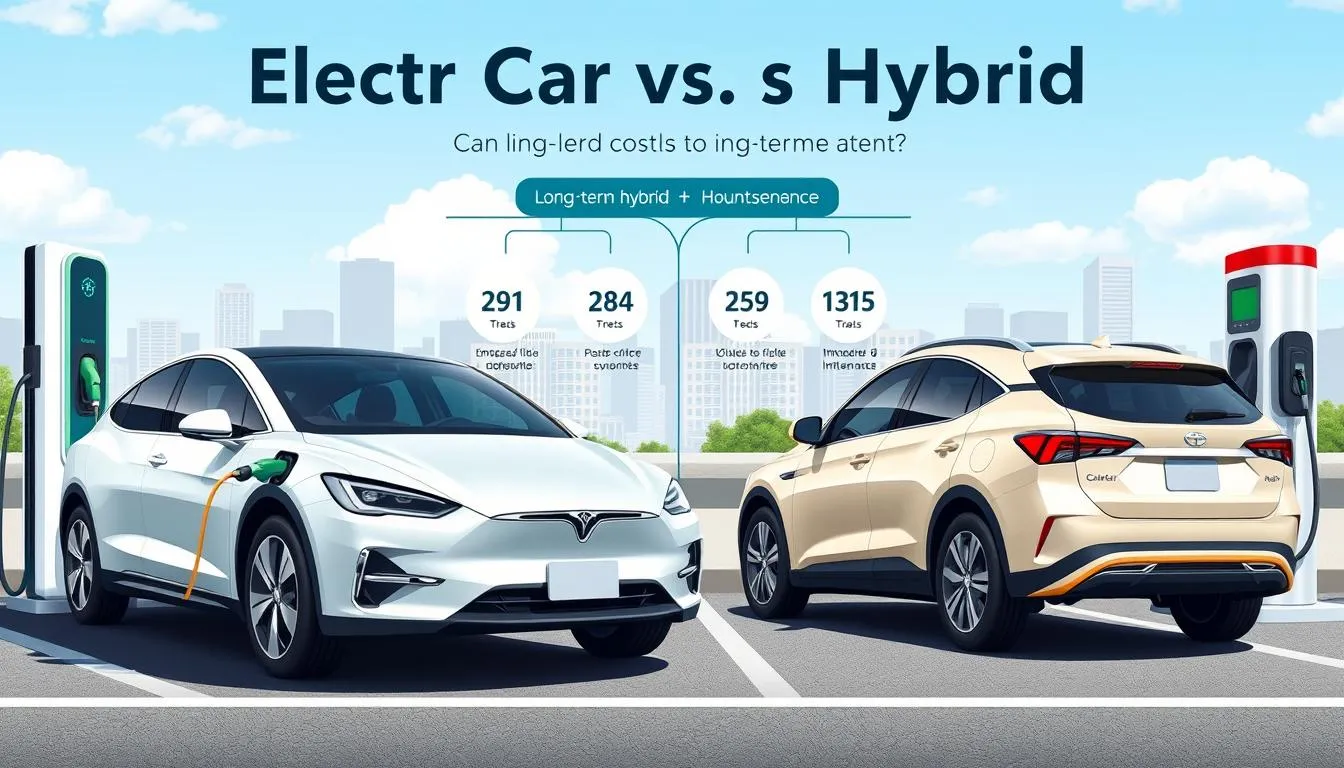
The cost of “fueling” an electric car is typically lower than that of a hybrid. Electricity is generally cheaper than gasoline, and electric cars convert about 60-70% of the electrical energy from the grid to power the wheels, while hybrids convert only about 20% of the energy stored in gasoline. For instance, charging an electric car can cost as little as $3 to $5 per 100 miles, whereas driving a hybrid 100 miles can cost around $12 to $15.
Insurance and Depreciation Factors
Insurance costs for electric cars and hybrids can vary, but generally, electric cars tend to be more expensive to insure due to their higher purchase prices. However, some insurers offer discounts for electric vehicles due to their safety features and lower risk profile. Depreciation is another significant factor, with electric cars typically depreciating faster than hybrids, although this gap is narrowing as electric vehicles become more mainstream.
| Cost Factor | Electric Cars | Hybrids |
|---|---|---|
| Maintenance | Lower | Higher |
| Fuel/Electricity | Lower | Higher |
| Insurance | Potentially Higher | Lower |
Practical Aspects of Daily Use
Daily use of electric cars and hybrids involves several practical aspects that need to be evaluated. Understanding these factors can significantly influence the decision-making process for potential buyers.
Charging Time vs. Refueling Time
One of the primary considerations is the time it takes to charge an electric vehicle (EV) versus refueling a hybrid car. EVs can take anywhere from 30 minutes to several hours to charge, depending on the charger’s power and the vehicle’s battery capacity. In contrast, refueling a hybrid car is typically quick, taking around 5 minutes at a gas station. However, the development of fast-charging technology is significantly reducing EV charging times, making them more competitive with traditional refueling.
Weather Effects on Performance and Range
Weather conditions can affect both electric cars and hybrids, but in different ways. For EVs, extreme temperatures can impact battery efficiency and range. Cold weather, in particular, can reduce an EV’s range by up to 40%. Hybrids also experience performance variations in extreme weather, but their range is less affected since they can switch to gasoline power. Understanding these dynamics is crucial for comparing electric vehicles and making an informed decision.
Charging and Refueling Infrastructure
Understanding the current state of charging and refueling infrastructure is crucial for potential buyers of electric and hybrid vehicles. As the demand for eco-friendly transportation options continues to grow, the need for comprehensive and accessible charging and refueling networks becomes increasingly important.
Home Charging Options for EVs
For electric vehicle owners, home charging is a convenient option. Most EVs come with a Level 1 (120V) charger that can be used with a standard household outlet, although Level 2 (240V) charging stations are recommended for faster charging. Installing a Level 2 charger at home can significantly reduce charging times, making it ideal for daily driving needs.
Public Charging Network Status
The public charging network is expanding rapidly, with over 50,000 charging stations across the United States, according to recent data. This growth is supported by government initiatives and private investments, as outlined in the Congressional Report on EV Grid Impacts. Key locations for public charging include shopping centers, workplaces, and along highways, providing EV owners with flexibility and peace of mind during long trips.
Hybrid Refueling Convenience
Hybrid vehicles, on the other hand, offer the convenience of refueling at any standard gasoline station, eliminating range anxiety associated with EVs. This makes hybrids an attractive option for those who need flexibility for long-distance travel without the need for specialized charging infrastructure.
Popular Models in the US Market
For those looking to switch to a more sustainable ride, exploring the most popular electric and hybrid models in the US market is a great starting point. The US automotive market is witnessing a significant shift towards eco-friendly options, with various models gaining popularity among consumers.
Top Electric Car Models of 2023
The electric vehicle (EV) segment has seen tremendous growth, with several models standing out in 2023. These models offer a blend of performance, range, and affordability, catering to different consumer needs.
Affordable Electric Options
For budget-conscious buyers, models like the Nissan Leaf and Chevrolet Bolt offer great value. The Nissan Leaf, for instance, is known for its reliability and affordability, with a range of up to 226 miles on a single charge. The Chevrolet Bolt, on the other hand, provides a spacious interior and a range of 259 miles, making it a compelling option in the affordable EV segment.
Luxury Electric Vehicles
On the luxury end, models such as the Tesla Model S and Audi e-tron GT are making waves. The Tesla Model S offers exceptional performance, with a range of up to 405 miles, while the Audi e-tron GT combines luxury with a range of up to 238 miles and impressive acceleration.
Leading Hybrid Options Available Today
Hybrid vehicles, including standard hybrids and plug-in hybrids, offer another viable option for those looking to reduce their carbon footprint. These models combine the benefits of electric and gasoline powertrains.
Standard Hybrid Models
Popular standard hybrid models include the Toyota Prius and Honda Civic Hybrid. The Toyota Prius is renowned for its fuel efficiency, while the Honda Civic Hybrid offers a balance of performance and economy.
Plug-in Hybrid Alternatives
For those who want the flexibility of electric driving with the range of a gasoline engine, plug-in hybrids like the Toyota RAV4 Prime and Ford Escape PHEV are worth considering. These models offer significant electric-only range and the convenience of a gasoline engine for longer trips.
As the US market continues to evolve, these models represent some of the best eco-friendly cars available, offering consumers a range of choices to suit their needs and preferences.
Lifestyle Compatibility: Which Option Suits Your Needs?
To make an informed decision between electric cars and hybrids, it’s essential to assess your lifestyle and driving requirements. Your choice of vehicle should align with your daily driving habits, travel needs, and personal preferences.
City vs. Highway Driving Considerations
For city dwellers, electric vehicles (EVs) are often a great fit due to their suitability for short, frequent trips. Hybrids also excel in city driving by optimizing fuel efficiency in stop-and-go traffic. However, for those who frequently embark on highway driving or long-distance travel, hybrids might have an edge due to their ability to refuel quickly and travel longer distances without needing to recharge.
As noted by
“The future of transportation is electric, but hybrids still have a significant role to play, especially for drivers with varied needs.”
This highlights the importance of considering your driving patterns when choosing between EVs and hybrids.
Long-Distance Travel Capabilities
When it comes to long-distance travel, the driving range becomes a critical factor. EVs have made significant strides in range capability, with some models offering over 300 miles on a single charge. However, charging infrastructure can still be a concern in some areas. Hybrids, on the other hand, offer the flexibility of switching to gasoline power when needed, making them well-suited for long trips. For more insights on the differences between hybrid and electric cars, you can visit this article that provides a detailed comparison.
Family Size and Cargo Requirements
Family needs are another crucial consideration. Both electric cars and hybrids come in various sizes, accommodating different family sizes and cargo requirements. It’s essential to consider the total passenger and cargo capacity when making your decision. The following table provides a comparison of some popular models:
| Model | Type | Passenger Capacity | Cargo Space (cu.ft.) |
|---|---|---|---|
| Tesla Model 3 | Electric | 5 | 15 |
| Toyota Prius Hybrid | Hybrid | 5 | 27.4 |
| Hyundai Kona Electric | Electric | 5 | 19.2 |
| Toyota RAV4 Hybrid | Hybrid | 5 | 37.6 |
Conclusion: Making Your Green Vehicle Decision
Choosing between electric cars and hybrids depends on several factors, including your driving habits, budget, and environmental priorities. When deciding on the best eco-friendly cars, consider the key differences between electric cars vs hybrids.
Electric cars offer zero CO2 emissions during operation, making them an attractive option for those prioritizing environmental sustainability. Hybrids, on the other hand, provide a balance between fuel efficiency and long driving ranges, making them suitable for a wider range of driving needs.
Ultimately, the decision comes down to your specific needs and preferences. By weighing factors such as purchase costs, long-term ownership expenses, and daily usability, you can make an informed choice that aligns with your lifestyle and values.
Whether you opt for an electric car or a hybrid, you’re contributing to a more sustainable transportation future. Research and test drive different models to find the best fit for you.
FAQ
What are the main differences between electric cars and hybrid cars?
Electric cars run solely on electric power from a battery, while hybrid cars combine a conventional combustion engine with an electric motor and battery.
Are electric cars more eco-friendly than hybrids?
Electric cars produce zero tailpipe emissions, making them a more eco-friendly option, especially when charged with renewable energy. Hybrids, however, offer improved fuel efficiency and lower emissions compared to traditional gasoline-powered vehicles.
How do I charge an electric car, and how long does it take?
Electric cars can be charged at home using a Level 1 (120V) or Level 2 (240V) charger, or at public charging stations. Charging time varies depending on the charger type and the car’s battery size, ranging from 30 minutes to several hours for a full charge.
What are the benefits of owning a hybrid car?
Hybrid cars offer improved fuel efficiency, lower emissions, and the convenience of not needing to be plugged in for charging. They also often have a longer driving range than electric cars.
Can I drive an electric car in extreme weather conditions?
Yes, electric cars can operate in various weather conditions, but extreme temperatures may affect their range and performance. Most electric cars have thermal management systems to mitigate these effects.
Are there government incentives available for buying electric or hybrid cars?
Yes, the US government offers federal tax credits for purchasing eligible electric and plug-in hybrid vehicles. Some states also provide additional incentives, such as rebates or exemptions from certain fees.
How do electric cars compare to hybrids in terms of performance?
Electric cars generally offer instant torque and quicker acceleration than hybrids, while hybrids provide a balance between fuel efficiency and performance.
What is the average lifespan of an electric car’s battery?
Most electric car manufacturers guarantee their batteries for 8 to 10 years or up to 100,000 miles. The average lifespan of an electric car’s battery is expected to be around 15 to 20 years.
Can I install a home charging station for my electric car?
Yes, many electric car owners install a Level 2 home charging station, which requires a 240-volt electrical supply. It’s recommended to consult with a licensed electrician for the installation.
Are electric cars and hybrids more expensive to insure than traditional gasoline-powered vehicles?
Insurance costs for electric cars and hybrids can vary depending on several factors, including the vehicle’s make and model, driver’s history, and location. Some studies suggest that electric cars may have slightly higher insurance premiums, while hybrids are generally comparable to traditional vehicles.