How to Create a Sustainable Home Office Environment
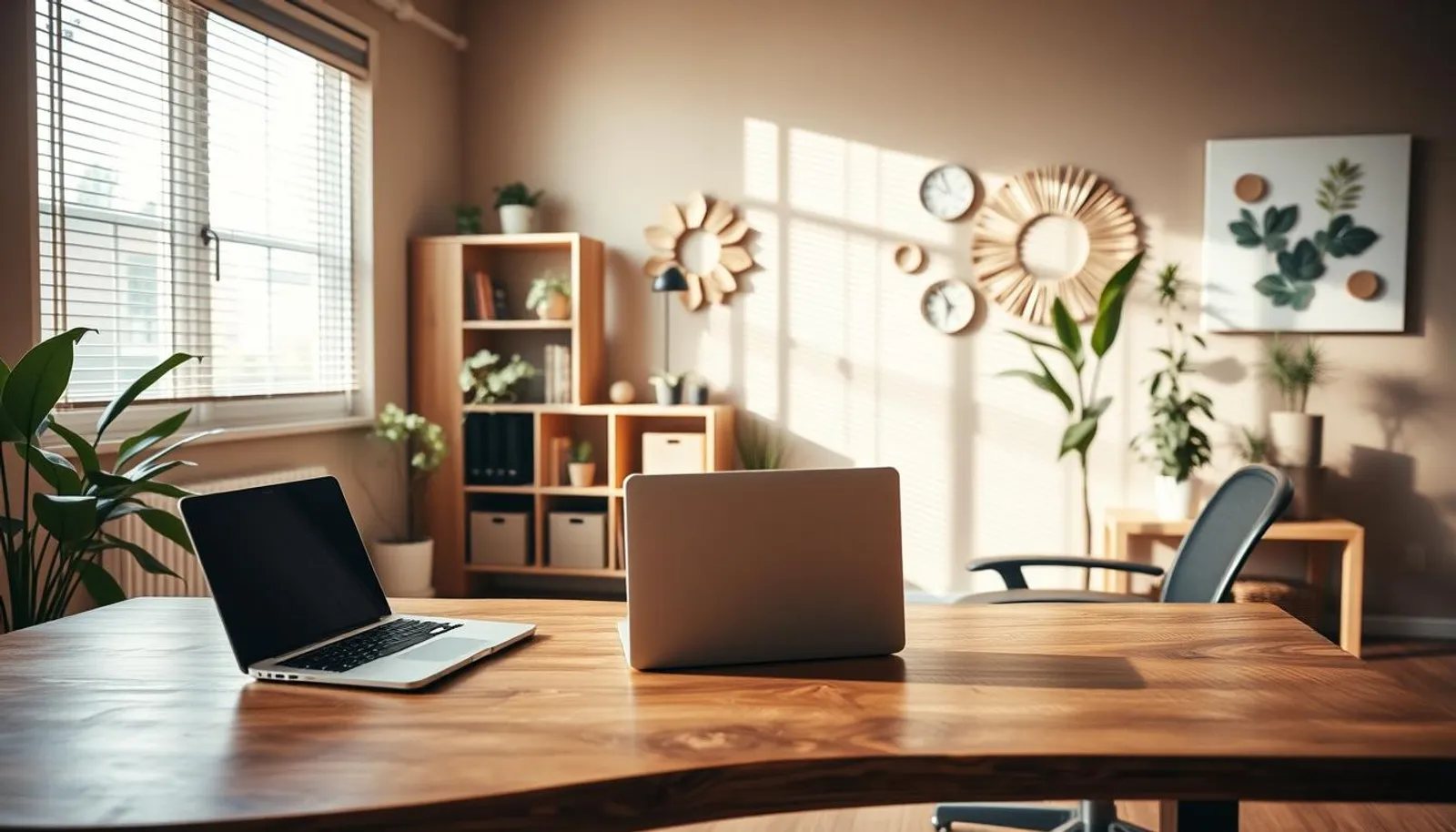
By making a few straightforward adjustments, you can transform your workspace into an eco-friendly haven. This article will guide you through various tips and strategies to achieve a more sustainable work environment.

14 min read
Creating an eco-friendly workspace is crucial in today’s environmentally conscious world. As we spend more time working from home, it’s essential to ensure our office spaces are not only productive but also environmentally friendly.
A sustainable workspace not only reduces our environmental footprint but also enhances our well-being and productivity. By incorporating simple changes into our daily work routine and workspace setup, we can make a significant positive impact.
By making a few straightforward adjustments, you can transform your workspace into an eco-friendly haven. This article will guide you through various tips and strategies to achieve a more sustainable work environment.
Key Takeaways
- Simple changes can significantly reduce environmental impact.
- An eco-friendly workspace enhances productivity and well-being.
- Practical tips will be provided to achieve a sustainable workspace.
- Daily work routines and workspace setup play a crucial role.
- A sustainable workspace is achievable with minimal adjustments.
The Benefits of a Sustainable Home Office
A sustainable home office offers a multitude of benefits that can positively impact both the environment and your personal well-being. By incorporating eco-friendly workspace tips, you can create a workspace that is not only beneficial for the planet but also enhances your productivity and health.
Environmental Impact Reduction
One of the primary advantages of a sustainable home office is the reduction in environmental impact. By using energy-efficient equipment and reducing waste, you can significantly minimize your carbon footprint. Simple changes like switching to LED bulbs or using recycled materials for your office supplies can make a substantial difference.
Cost Savings Over Time
A sustainable home office can also lead to cost savings over time. Energy-efficient appliances and lighting may have a higher upfront cost, but they consume less energy, leading to lower utility bills. Additionally, reducing, reusing, and recycling can cut down on unnecessary expenses.
Health and Productivity Improvements
Furthermore, a well-designed sustainable home office can improve your health and productivity. Natural light, proper ventilation, and a clutter-free environment can boost your mood and efficiency. Incorporating plants into your workspace is another eco-friendly workspace tip that can enhance air quality and create a more pleasant working environment.
By embracing these practices, you not only contribute to a healthier planet but also create a more productive and comfortable workspace.
Assessing Your Current Home Office Setup
Transforming your home office into a sustainable space begins with a thorough assessment of your current setup. As reducing office waste is a crucial aspect of creating an eco-friendly workspace, understanding your current practices is key.
Conducting a Sustainability Audit
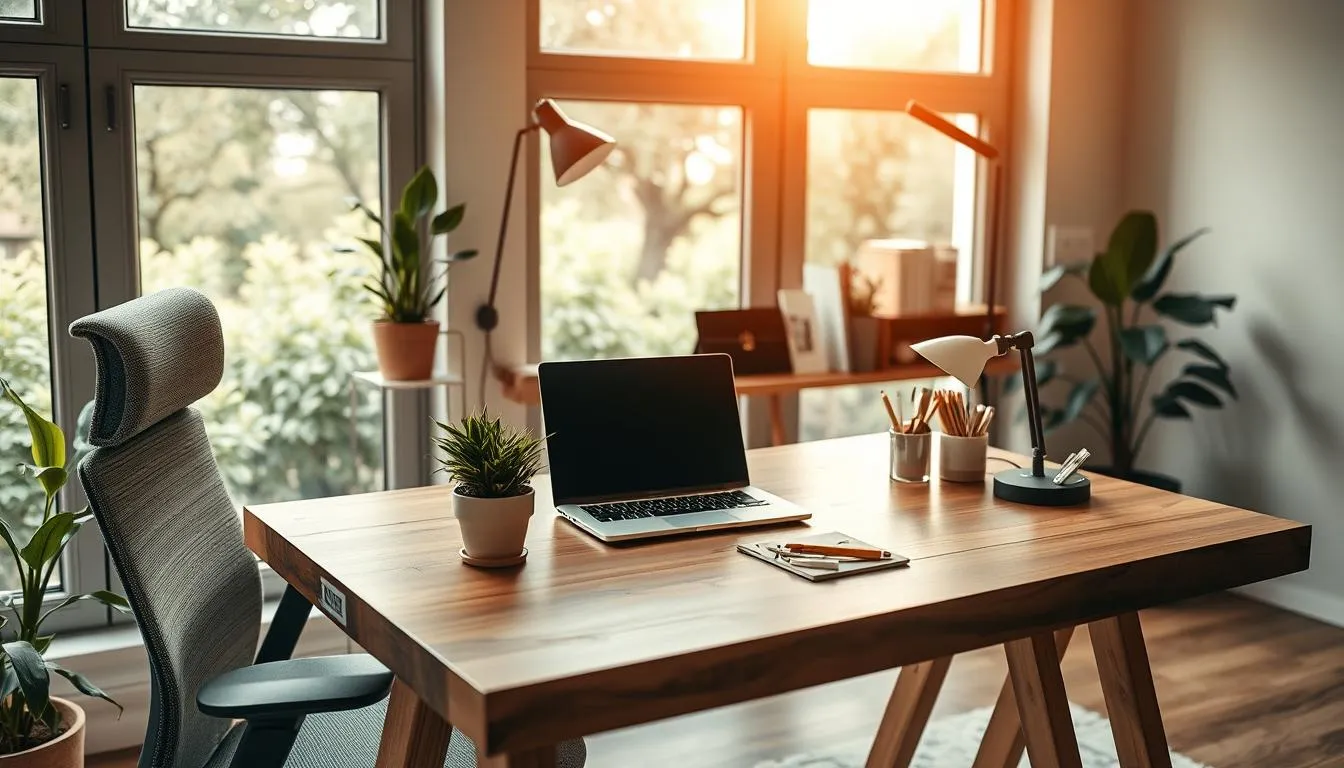
Start by conducting a comprehensive sustainability audit. This involves evaluating your energy consumption, waste generation, and the materials used in your home office. Take note of your lighting, electronics, furniture, and office supplies. Consider how you can minimize waste and reduce your environmental footprint.
Identifying Areas for Improvement
Once you have a clear picture of your current setup, identify areas that need improvement. Look for opportunities to reduce, reuse, and recycle. For instance, you might find that you’re using single-use plastics or that your energy consumption is higher than necessary. Check out our guide on how to create a productive desk for more tips.
Setting Realistic Sustainability Goals
After identifying areas for improvement, set realistic sustainability goals. These could include reducing your energy consumption by a certain percentage, eliminating single-use plastics, or implementing a recycling program. As the saying goes, “You can’t manage what you don’t measure.” Setting clear goals will help you stay on track and make meaningful changes to your home office.
By following these steps, you can create a more sustainable home office that not only benefits the environment but also enhances your productivity and well-being.
Designing Your Sustainable Home Office Layout
To create an eco-friendly home office, it’s essential to focus on a layout that maximizes space and minimizes waste. A well-designed layout not only contributes to a more sustainable environment but also improves your productivity and work experience.
Space-Efficient Floor Plans
A space-efficient floor plan is crucial for a sustainable home office. It involves optimizing the available space to accommodate your work needs without unnecessary clutter. Consider using a modular furniture system that can be rearranged as needed.
Multipurpose Furniture Arrangements
Multipurpose furniture is a key element in sustainable home office design. It serves more than one purpose, reducing the need for additional pieces and thereby minimizing waste. For example, a desk with built-in storage can help keep your workspace organized and clutter-free. For more ideas on making your office more sustainable, visit ecosend.io.
| Furniture | Multipurpose Use | Sustainability Benefit |
|---|---|---|
| --- | --- | --- |
| Storage Desk | Work surface and storage | Reduces clutter, minimizes need for additional furniture |
| Convertible Sofa | Sitting area and guest bed | Optimizes space, reduces the need for a separate guest room |
Ensuring that your home office is accessible and flexible is vital for long-term sustainability. This includes designing the space to be adaptable to different tasks and needs over time. Incorporating elements like ergonomic furniture and adjustable lighting can enhance both accessibility and flexibility.
Choosing Eco-Friendly Office Furniture
Eco-friendly office furniture is a crucial element in designing a sustainable workspace. By choosing furniture that is both environmentally responsible and functional, you can create a home office that is not only good for the planet but also conducive to productivity.
Sustainable Materials and Certifications
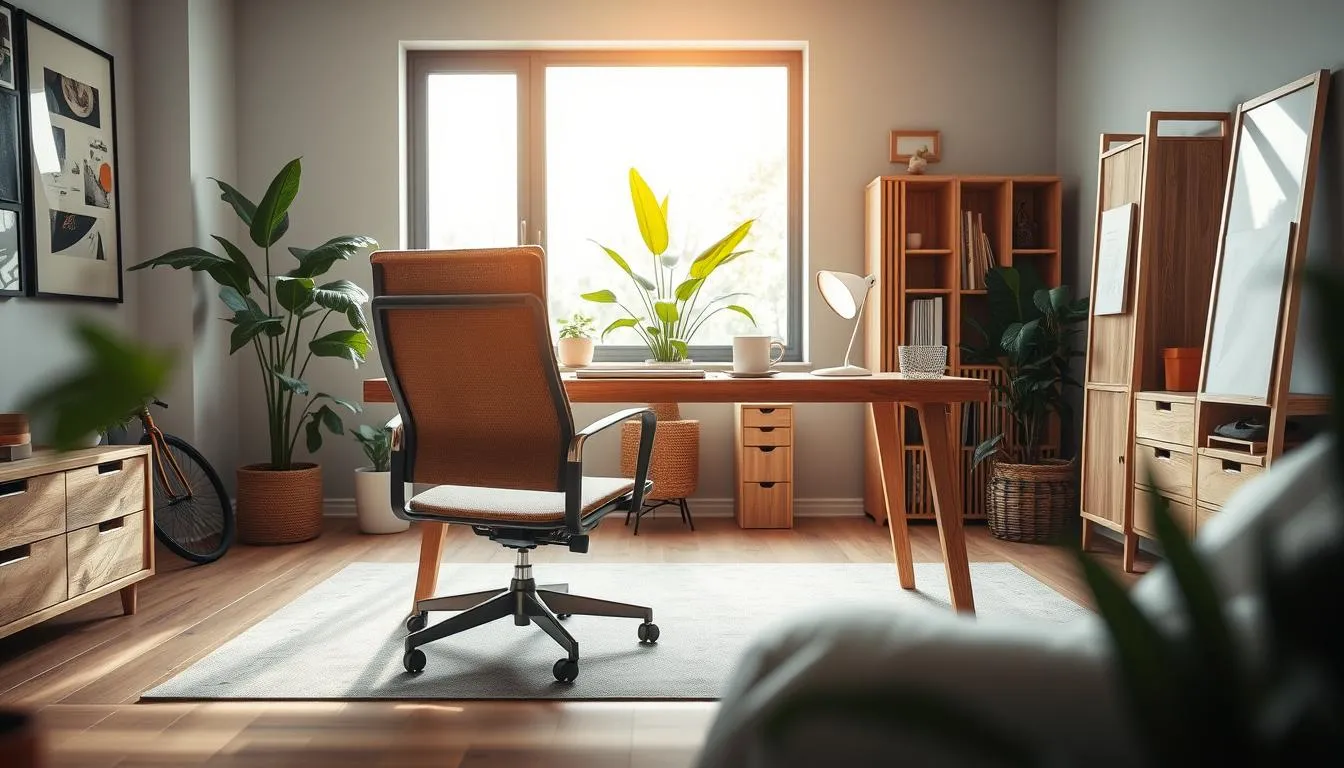
When selecting office furniture, look for pieces made from sustainable materials such as reclaimed wood, bamboo, or recycled metal. Certifications like FSC (Forest Stewardship Council) ensure that the wood used is sourced responsibly. Additionally, consider furniture made from low-VOC (Volatile Organic Compound) materials to improve indoor air quality.
Secondhand and Upcycled Options
Exploring secondhand and upcycled furniture is another effective way to reduce your environmental footprint. Websites like Craigslist, Facebook Marketplace, and local thrift stores often have gently used furniture that can be repurposed for your home office. Upcycling old furniture not only reduces waste but also adds a unique touch to your workspace.
Ergonomics and Longevity Balance
While sustainability is crucial, it’s equally important to balance it with ergonomics and longevity. Choose furniture that is designed to promote good posture and reduce eye strain. Investing in durable, high-quality pieces may cost more upfront but will save you money in the long run by reducing the need for frequent replacements.
By considering these factors, you can create a home office that is both eco-friendly and functional, contributing to a more sustainable future.
Energy-Efficient Technology and Equipment
Energy-efficient technology is a cornerstone of a sustainable home office, reducing both environmental impact and energy costs. By incorporating the right devices and strategies, you can significantly lower your carbon footprint.
ENERGY STAR Certified Devices
One of the simplest ways to make your home office more energy-efficient is by using ENERGY STAR certified devices. These devices are designed to consume less energy while maintaining performance. For example, ENERGY STAR certified computers, monitors, and printers can help reduce energy consumption. You can find a wide range of certified products on the official ENERGY STAR website.
Power Management Strategies
Implementing effective power management strategies is crucial. This includes turning off devices when not in use, using power strips to eliminate standby power consumption, and adjusting your computer’s power settings. Simple actions like these can make a significant difference.
Renewable Energy Solutions for Home Offices
For a more significant impact, consider investing in renewable energy solutions such as solar panels or renewable energy credits. These options can help offset your energy consumption and reduce your reliance on non-renewable energy sources.
By combining ENERGY STAR certified devices, effective power management, and renewable energy solutions, you can create a home office that is not only sustainable but also cost-effective in the long run.
Optimizing Natural Light and Air Quality
A sustainable home office starts with optimizing natural light and air quality, setting the stage for a healthier workspace. This involves making conscious decisions about how to design and equip your workspace.
Strategic Workspace Positioning
Positioning your workspace to maximize natural light can significantly reduce the need for artificial lighting. This not only saves energy but also creates a more pleasant working environment. Consider placing your desk near a window to take full advantage of natural light.
Natural Ventilation Techniques
Improving air quality through natural ventilation is another key aspect. Techniques such as opening windows, using fans, or installing vents can enhance airflow and reduce the reliance on air conditioning or heating systems.
Indoor Air Purifying Solutions
In addition to natural ventilation, using indoor air purifying solutions can further improve air quality. Products like HEPA filters or air purifiers can remove pollutants and allergens, creating a healthier workspace.
| Method | Benefits |
|---|---|
| Strategic Workspace Positioning | Reduces energy consumption, enhances working environment |
| Natural Ventilation Techniques | Improves air quality, reduces reliance on mechanical systems |
| Indoor Air Purifying Solutions | Removes pollutants and allergens, enhances health |
Eco-Friendly Office Supplies and Materials
Incorporating eco-friendly office supplies is a key step towards a sustainable home office environment. By making conscious choices about the products we use daily, we can significantly reduce our environmental footprint.
Plastic-Free Alternatives
One of the simplest ways to make your home office more sustainable is by switching to plastic-free alternatives. For instance, you can replace plastic pens with ones made from recycled materials or biodegradable components. Sustainable recycled products can be a great option for your office needs.
Recycled and Recyclable Products
Opting for products made from recycled materials or those that are recyclable themselves is another effective strategy. This includes paper products, such as notebooks and printer paper, made from recycled fibers. You can also look for office supplies like staplers and folders made from recyclable materials.
| Product | Recycled Content | Recyclable |
|---|---|---|
| --- | --- | --- |
| Notebooks | Yes | Yes |
| Printer Paper | Yes | Yes |
| Staplers | No | Yes |
Transitioning to digital tools is a highly effective way to reduce paper consumption in your home office. Consider using digital note-taking apps, cloud storage for documents, and electronic invoicing and billing systems. As *“going green” becomes more of a priority, adopting digital solutions can significantly contribute to a more sustainable workspace.
“The clearest way into the Universe is through a forest wilderness.” - John Muir
By implementing these strategies, you can create a more eco-friendly home office that not only benefits the environment but also enhances your productivity and well-being.
Creating a Zero-Waste Sustainable Home Office
In the quest for a more sustainable home office, minimizing waste is a key objective. Achieving a zero-waste home office requires a multifaceted approach that includes reducing, reusing, and recycling.
Composting Office Organic Waste
One of the simplest ways to reduce waste is by composting organic materials. This includes paper coffee cups, food waste, and other biodegradable materials. By composting, you can divert a significant amount of waste from landfills and create nutrient-rich soil for your plants.
Responsible E-Waste Disposal Methods
Electronic waste, or e-waste, is a growing concern. To responsibly dispose of e-waste, consider recycling programs or donating still-functional devices. Many manufacturers and local governments offer e-waste recycling initiatives.
Here is a comparison of different e-waste disposal methods:
| Disposal Method | Environmental Impact | Cost |
|---|---|---|
| --- | --- | --- |
| Landfill | High | Low |
| Recycling | Low | Moderate |
| Donation | Low | Low |
Reusing and repurposing office materials can significantly reduce waste. Consider using old jars for storage, turning cardboard boxes into organizers, or repurposing old furniture.
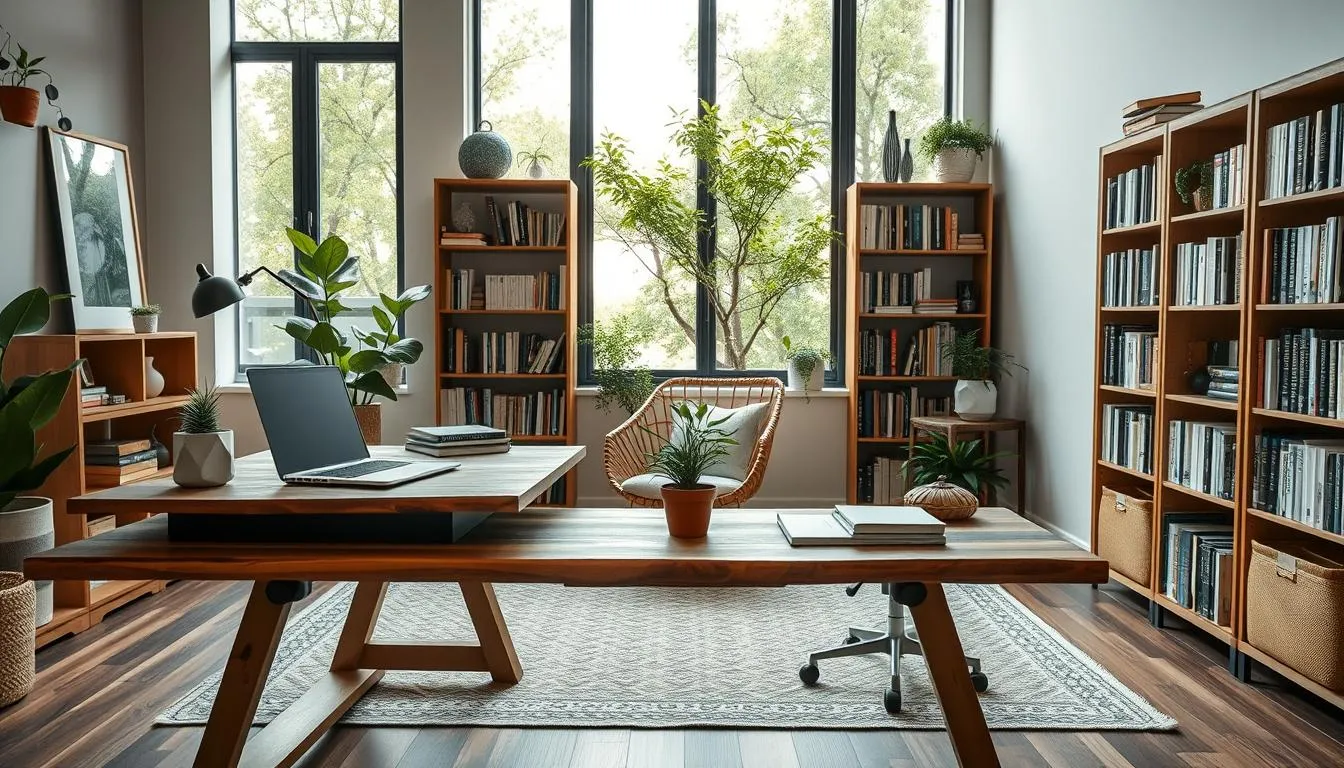 By implementing these strategies, you can create a more sustainable home office environment. Not only will you reduce your environmental footprint, but you’ll also contribute to a healthier and more productive workspace.
Incorporating Biophilic Elements in Your Home Office
Incorporating elements of nature into your workspace can significantly boost productivity and well-being. Biophilic design is not just a trend; it’s a way to create a healthier and more sustainable home office.
Best Plants for Air Purification and Productivity
Choosing the right plants can improve air quality and enhance your work environment. Plants like Snake Plants and Spider Plants* are known for their air-purifying properties and are easy to care for. Incorporating these plants into your office can lead to a more productive workspace.
Natural Materials and Textures
Using natural materials and textures can add warmth and character to your home office. Consider incorporating elements like reclaimed wood or natural stone into your decor. These materials not only look great but also contribute to a more sustainable environment.
Low-Maintenance Greenery Options
For those who don’t have a green thumb, there are plenty of low-maintenance greenery options available. **
Succulents* and cacti are perfect for busy professionals, requiring minimal care while still providing the benefits of having plants in the office.
Conclusion: Maintaining Your Sustainable Home Office Long-Term
Creating a sustainable home office is just the first step; maintaining it long-term requires ongoing commitment and continuous improvement. By regularly assessing and adjusting your practices, you can ensure your home office remains eco-friendly and productive. The journey to a sustainable home office involves implementing energy-efficient technology, reducing waste, and incorporating biophilic elements.
As highlighted in the sustainability report, companies are achieving significant reductions in energy costs and waste. You can apply similar strategies to your home office, such as using LED lighting, adopting recycling initiatives, and choosing eco-friendly office supplies. By doing so, you’ll not only reduce your environmental footprint but also create a healthier and more productive workspace.
Maintaining a sustainable home office is a long-term process that requires regular monitoring and adjustments. By staying committed to your sustainability goals, you can enjoy the benefits of a reduced environmental impact, cost savings, and improved well-being. Start your journey to a more sustainable home office today and make a positive impact on the environment.
FAQ
What are some simple ways to make my home office more eco-friendly?
Start by reducing energy consumption with ENERGY STAR certified devices, using recycled and recyclable office supplies, and optimizing natural light. Consider repurposing or upcycling old furniture and materials to minimize waste.
How can I reduce waste in my home office?
Implement a recycling program, compost office organic waste, and adopt digital tools to reduce paper consumption. You can also explore creative reusing and repurposing strategies for office supplies and materials.
What are some eco-friendly office furniture options?
Look for furniture made from sustainable materials, such as reclaimed wood or bamboo, and consider secondhand or upcycled options. Ensure that the furniture is durable and ergonomic to promote longevity and comfort.
How can I improve air quality in my home office?
Strategically position your workspace to maximize natural ventilation, use indoor air purifying solutions, and incorporate plants known for their air-purifying properties, such as spider plants or peace lilies.
What are some tips for creating a sustainable home office on a budget?
Start by assessing your current setup and identifying areas for improvement. Repurpose or upcycle existing materials, shop for secondhand furniture, and explore affordable eco-friendly office supplies. Consider energy-efficient upgrades that can save you money in the long run.
How can I maintain my sustainable home office long-term?
Regularly assess your practices and make adjustments as needed. Stay informed about new eco-friendly technologies and strategies, and continue to set realistic sustainability goals to ensure your home office remains environmentally responsible.
What are some benefits of incorporating biophilic elements in my home office?
Incorporating biophilic elements, such as plants, natural materials, and textures, can enhance aesthetics, improve air quality, and boost productivity. Biophilic design can also promote a sense of well-being and connection to nature.
How can I reduce my carbon footprint with energy-efficient technology?
Use ENERGY STAR certified devices, implement power management strategies, and explore renewable energy solutions, such as solar panels or renewable energy credits, to minimize your carbon footprint.