Innovative Technologies Driving Eco-Friendly Innovations
Technology plays a vital role in sustainable development, enabling the creation of innovative solutions that balance economic growth with environmental protection.

18 min read
The world is witnessing a significant shift towards sustainable living, driven by the need to reduce our environmental footprint. **
Eco-friendly technology innovations** are at the forefront of this movement, transforming the way we live, work, and interact with the planet.
As concern for the environment continues to grow, companies and individuals are turning to sustainable tech trends to make a positive impact. From renewable energy sources to green manufacturing practices, these innovations are paving the way for a more environmentally conscious future.
Key Takeaways
- Eco-friendly technology is driving sustainable living.
- **
Sustainable tech trends** are transforming industries.
- Innovations in renewable energy are on the rise.
- Green manufacturing practices are becoming more prevalent.
- A more environmentally conscious future is on the horizon.
The Urgent Need for Eco-Friendly Technology Innovations
As the world grapples with the challenges of climate change, the need for eco-friendly technology innovations has never been more pressing. The environmental impact of human activities has reached alarming levels, necessitating a shift towards sustainable practices and technologies.
Current Environmental Challenges
The planet is facing numerous environmental challenges, including climate change acceleration and resource depletion concerns. **
Climate change** is one of the most pressing issues, with rising global temperatures and extreme weather events becoming more frequent.
Climate Change Acceleration
The acceleration of climate change is attributed to the increasing levels of greenhouse gases in the atmosphere, primarily due to carbon emissions from industrial activities and transportation. As stated by the IPCC, “Global warming is likely to reach 1.5C between 2030 and 2052 if it continues to increase at the current rate.”
Resource Depletion Concerns
Resource depletion is another significant concern, with the overexploitation of natural resources threatening ecosystems and biodiversity. The adoption of green technologies can help mitigate these issues by promoting sustainable resource management.
The Role of Technology in Sustainable Development
Technology plays a vital role in sustainable development, enabling the creation of innovative solutions that balance economic growth with environmental protection.
Balancing Innovation with Environmental Protection
Balancing innovation with environmental protection is crucial, ensuring that technological advancements do not come at the expense of the planet’s well-being.
Key Sustainability Goals Driving Tech Development
The United Nations’ Sustainable Development Goals (SDGs) provide a framework for tech development, guiding innovations towards achieving a more sustainable future.
Renewable Energy Breakthroughs
Breakthroughs in renewable energy are revolutionizing the way we generate and consume power. The shift towards sustainable energy sources is driven by technological innovations and the urgent need to address climate change. As we move towards a greener future, advancements in renewable energy are playing a crucial role in reducing our reliance on fossil fuels.
Next-Generation Solar Technologies
Next-generation solar technologies are enhancing the efficiency and affordability of solar energy. These advancements are crucial for the widespread adoption of solar power as a viable alternative to traditional energy sources.
Perovskite Solar Cells
Perovskite solar cells are emerging as a promising technology, offering higher power conversion efficiency and lower production costs compared to traditional silicon-based cells. Their potential to revolutionize the solar industry is significant.
Building-Integrated Photovoltaics
Building-integrated photovoltaics (BIPV) integrate solar panels into building structures, such as rooftops and facades, providing a seamless and efficient way to generate renewable energy. This technology is particularly useful in urban areas where space is limited.
Wind Energy Innovations
Wind energy is another critical component of the renewable energy mix, with ongoing innovations aimed at increasing efficiency and reducing costs. Advances in turbine design and installation techniques are making wind energy more viable.
Floating Offshore Wind Farms
Floating offshore wind farms are being developed to harness wind energy in deeper waters, opening up new areas for wind farm installations. This technology has the potential to significantly increase the global wind energy capacity.
Bladeless Wind Turbines
Bladeless wind turbines represent a novel approach to wind energy generation, using vibrations to produce electricity without the need for traditional blades. This design could reduce environmental impacts and improve efficiency.
Emerging Wave and Tidal Power Solutions
Wave and tidal power are emerging as promising sources of renewable energy, with technologies being developed to harness the power of ocean waves and tidal currents. These sources have the potential to provide a consistent and predictable supply of energy.
Oscillating Water Column Technology
Oscillating water column technology captures the energy from ocean waves by using the rise and fall of water to drive air through a turbine, generating electricity. This method is being explored for its potential to provide reliable and renewable energy.
Tidal Stream Generators
Tidal stream generators are underwater turbines that capture the kinetic energy of tidal currents, similar to wind turbines but submerged in the ocean. They offer a predictable source of renewable energy, leveraging the regular flow of tidal currents.
For more information on green technology innovation examples, visit Triangle IP’s website, a leader in sustainable tech trends and future of eco innovation.
Sustainable Transportation Revolution
Sustainable transportation is no longer a concept of the future; it’s a reality that’s being shaped by innovative technologies today. The transportation sector is a significant contributor to global emissions, and the shift towards sustainability is both urgent and necessary.
Electric Vehicle Advancements
Electric vehicles (EVs) are leading the charge in the sustainable transportation revolution. With advancements in battery technology and charging infrastructure, EVs are becoming increasingly viable for consumers.
Solid-State Battery Technology
**
Solid-state battery technology** is a game-changer for EVs, promising higher energy density, faster charging times, and improved safety.
Ultra-Fast Charging Infrastructure
The development of ultra-fast charging infrastructure is crucial for widespread EV adoption, reducing charging times to under 30 minutes.
Hydrogen Fuel Cell Technology
Hydrogen fuel cell technology offers another promising avenue for sustainable transportation, particularly for heavy-duty vehicles and long-haul transport.
Green Hydrogen Production Methods
**
Green hydrogen production methods**, such as electrolysis using renewable energy, are key to making hydrogen fuel cell technology more sustainable.
Fuel Cell Applications Beyond Cars
Fuel cell technology has applications beyond passenger vehicles, including buses, trucks, and even maritime transport.
Sustainable Aviation Fuels
The aviation industry is also turning to sustainable fuels to reduce its carbon footprint. Sustainable Aviation Fuels (SAF) are made from renewable resources and can significantly reduce lifecycle emissions.
Biofuel Innovations for Aircraft
**
Biofuel innovations for aircraft** are critical, offering a drop-in replacement for conventional jet fuel with lower carbon emissions.
Electric and Hybrid Aircraft Development
Electric and hybrid aircraft development is another area of innovation, with potential for significant emissions reductions in the aviation sector.
| Technology | Benefits | Potential Impact |
|---|---|---|
| --- | --- | --- |
| Electric Vehicles | Zero tailpipe emissions, lower operating costs | Significant reduction in urban air pollution |
| Hydrogen Fuel Cells | Zero emissions, long driving range | Decarbonization of heavy-duty transport |
| Sustainable Aviation Fuels | Lower lifecycle emissions, compatible with existing infrastructure | Reduction in aviation sector emissions |
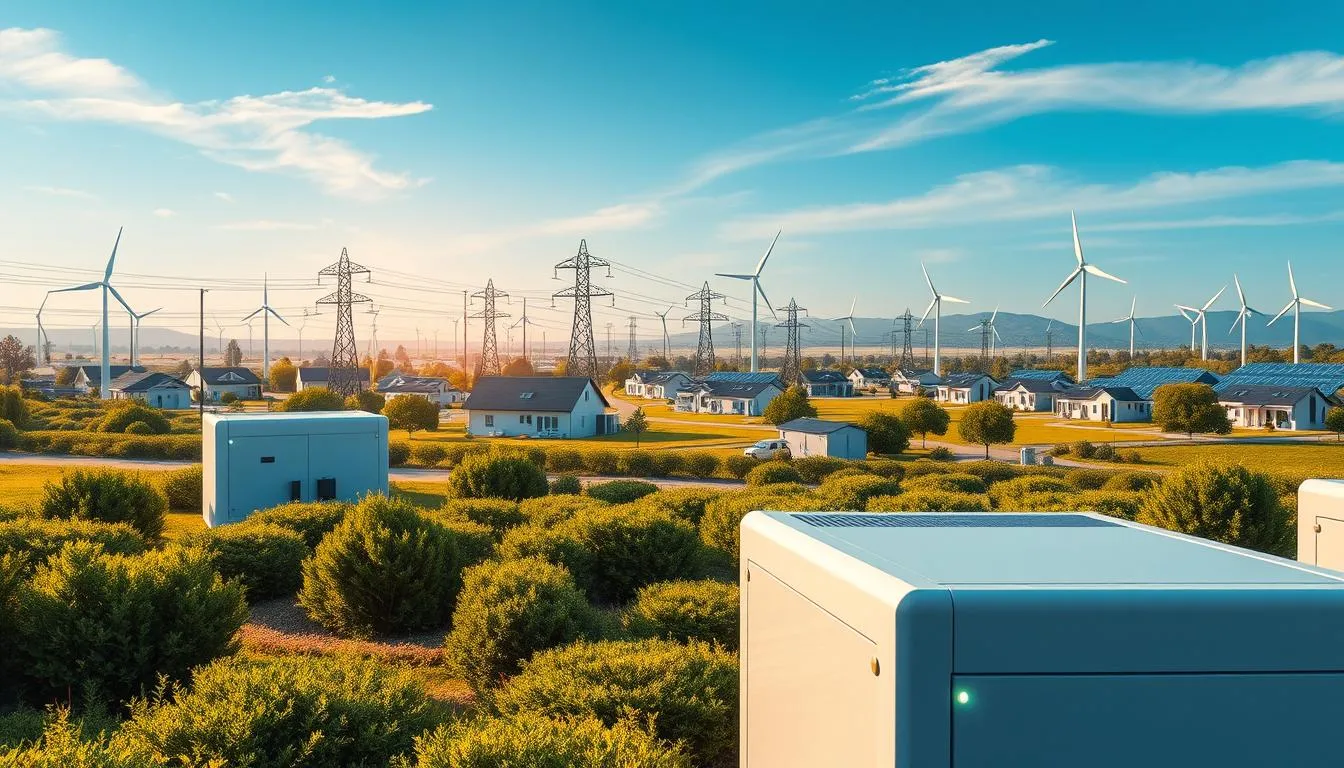
Smart grid and energy storage solutions are at the forefront of sustainable tech trends, enabling a more efficient energy future. As the world shifts towards renewable energy sources, the need for advanced grid management and energy storage becomes increasingly important.
Advanced Battery Technologies
The development of advanced battery technologies is crucial for effective energy storage. These innovations enable the efficient storage of excess energy generated from renewable sources, reducing reliance on fossil fuels.
Grid-Scale Storage Innovations
Grid-scale storage innovations are transforming the energy landscape by providing large-scale energy storage solutions. These systems help stabilize the grid and ensure a consistent energy supply.
Flow Batteries and Alternative Storage
Flow batteries and other alternative storage technologies offer promising solutions for long-duration energy storage. These technologies have the potential to significantly enhance the flexibility and resilience of the grid.
Intelligent Energy Distribution Systems
Intelligent energy distribution systems, including smart grids, are vital for managing the complex interactions between energy supply and demand. These systems utilize advanced technologies to optimize energy distribution.
AI-Powered Grid Management
AI-powered grid management systems are revolutionizing the way energy is distributed and consumed. By leveraging artificial intelligence, these systems can predict energy demand and adjust supply accordingly.
Decentralized Energy Networks
Decentralized energy networks are emerging as a key component of the future energy landscape. These networks enable the integration of distributed energy resources, enhancing grid resilience and efficiency.
| Technology | Description | Benefits |
|---|---|---|
| --- | --- | --- |
| Advanced Battery Technologies | Efficient energy storage solutions | Reduced reliance on fossil fuels, grid stabilization |
| Smart Grids | Intelligent energy distribution systems | Optimized energy distribution, enhanced grid resilience |
| Flow Batteries | Long-duration energy storage | Flexibility, grid stability |
The advent of eco-friendly technologies is transforming agricultural practices, enhancing efficiency and reducing environmental impact. These innovations are crucial for meeting the world’s growing food demands while minimizing the ecological footprint.
Precision Farming and IoT Applications
Precision farming leverages IoT applications to optimize crop yields and reduce waste. This approach utilizes advanced sensors and data analytics to make informed decisions.
Sensor Networks for Resource Optimization
Sensor networks play a vital role in monitoring soil conditions, temperature, and moisture levels, enabling farmers to optimize resource usage.
Drone and Satellite Monitoring Systems
Drones and satellites are used for monitoring crop health, detecting pests, and assessing soil conditions, allowing for timely interventions.
Vertical Farming and Urban Agriculture
Vertical farming and urban agriculture are gaining popularity as they offer sustainable ways to produce food in urban areas, reducing transportation costs and environmental impact.
LED Lighting and Climate Control Systems
LED lighting and advanced climate control systems are essential components of vertical farming, providing optimal growing conditions for crops.
Hydroponic and Aeroponic Innovations
Hydroponic and aeroponic systems are being adopted for soilless cultivation, conserving water and reducing the need for fertilizers and pesticides.
Sustainable Irrigation and Water Management
Efficient irrigation systems are critical for water conservation in agriculture. Technologies such as micro-irrigation and water recycling are being increasingly adopted.
Micro-Irrigation Technologies
Micro-irrigation delivers water directly to the roots of plants, minimizing evaporation and runoff.
Water Recycling Systems for Agriculture
Water recycling systems help in reusing water for irrigation, reducing the demand on freshwater resources.
| Innovation | Description | Benefits |
|---|---|---|
| --- | --- | --- |
| Precision Farming | Uses IoT and data analytics for optimized crop yields | Increased efficiency, reduced waste |
| Vertical Farming | Produces food in urban areas using controlled environments | Reduced transportation costs, lower environmental impact |
| Micro-Irrigation | Delivers water directly to plant roots | Water conservation, reduced evaporation |
Green building and construction technologies are revolutionizing the way we design and build structures. These innovations are crucial in reducing the environmental impact of the construction industry, which is a significant contributor to global energy consumption and emissions.
Sustainable Building Materials
The choice of building materials plays a vital role in the sustainability of a construction project. **
Sustainable materials** not only reduce environmental impact but also improve the health and productivity of building occupants.
Bio-Based Construction Materials
Bio-based materials, such as bamboo, straw, and recycled wood, offer a sustainable alternative to traditional building materials. These materials are renewable, biodegradable, and often have lower embodied energy.
Recycled and Upcycled Building Components
Using recycled and upcycled materials in construction reduces waste and conserves natural resources. Examples include reclaimed wood, recycled glass, and repurposed metal.
Energy-Efficient Design and Smart Buildings
Energy-efficient design and smart building technologies are integral to reducing the operational energy consumption of buildings. Green building features such as passive house design and IoT-enabled building management systems are becoming increasingly popular.
Passive House Standards and Implementation
The **
Passive House standard** is a rigorous certification program that ensures buildings are designed and constructed to be extremely energy-efficient. This is achieved through careful planning, high-performance insulation, and airtight construction.
IoT-Enabled Building Management Systems
**
IoT-enabled building management systems** allow for real-time monitoring and control of a building’s energy usage, water consumption, and waste management. This technology optimizes building performance and enhances occupant comfort.

Waste Management and Circular Economy Solutions
Innovative waste management technologies are paving the way for a more circular and sustainable economy. As the world grapples with the challenges of waste disposal and environmental sustainability, the need for effective waste management solutions has never been more pressing.
The shift towards a circular economy requires a multifaceted approach, including advanced recycling technologies and the development of biodegradable materials. These innovations not only reduce waste but also promote sustainable practices across various industries.
Advanced Recycling Technologies
Advanced recycling technologies play a crucial role in modern waste management. These technologies enable the efficient processing and recycling of materials that would otherwise end up in landfills.
Chemical Recycling Processes
Chemical recycling processes break down waste materials into their chemical building blocks, allowing for the creation of new products. This approach has the potential to significantly reduce plastic waste and promote a more circular economy. For more information on the impact of chemical recycling, visit recent studies.
AI-Powered Waste Sorting Systems
AI-powered waste sorting systems utilize machine learning algorithms to identify and sort recyclable materials from waste streams. This technology enhances the efficiency and accuracy of recycling processes, contributing to a more sustainable waste management system.
Biodegradable Materials and Alternatives to Plastics
The development of biodegradable materials and alternatives to plastics is another critical aspect of waste management. These materials offer a more sustainable solution to traditional plastics, reducing environmental harm and promoting eco-friendly practices.
Mycelium-Based Packaging
Mycelium-based packaging is an innovative biodegradable material made from mushroom roots. It provides a sustainable alternative to plastic packaging, with the added benefit of being compostable.
Seaweed and Algae-Derived Materials
Seaweed and algae-derived materials are also gaining attention as sustainable alternatives to traditional plastics. These materials are biodegradable and can be used in various applications, from packaging to textiles.
| Technology | Description | Benefits |
|---|---|---|
| --- | --- | --- |
| Chemical Recycling | Breaks down waste into chemical building blocks | Reduces plastic waste, promotes circular economy |
| AI-Powered Sorting | Utilizes AI for efficient waste sorting | Enhances recycling efficiency and accuracy |
| Mycelium-Based Packaging | Biodegradable packaging made from mushroom roots | Sustainable, compostable alternative to plastics |
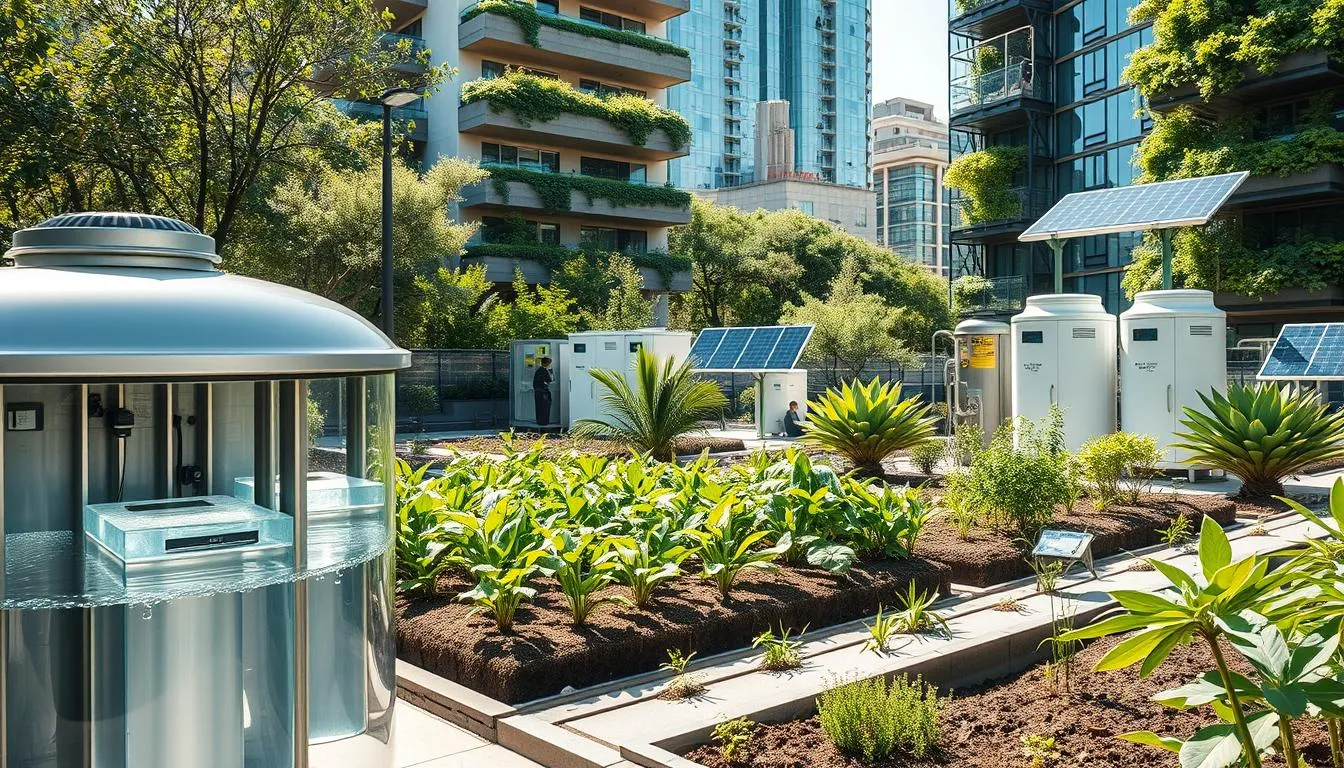
Innovations in water conservation and purification are not just necessary; they’re becoming a reality, thanks to advancements in sustainable tech trends. As the world faces increasing water scarcity, the need for effective solutions has never been more pressing.
Desalination Breakthroughs
Desalination, the process of removing salt from seawater, is becoming a vital source of fresh water in many regions. Recent breakthroughs have made this process more efficient and environmentally friendly.
Energy-Efficient Membrane Technologies
New membrane technologies have significantly reduced the energy required for desalination. These energy-efficient membrane technologies are making desalination a more viable option for communities worldwide.
Solar-Powered Desalination Systems
The integration of solar power into desalination systems is another significant innovation. Solar-powered desalination systems offer a sustainable and cost-effective solution for providing clean water.
Smart Water Monitoring and Management
Smart technologies are being increasingly used to monitor and manage water resources. These innovations help in detecting leaks, predicting water quality, and optimizing water distribution.
Leak Detection and Prevention Systems
Advanced leak detection systems can identify even the smallest leaks in water distribution networks, preventing significant water loss. These systems are crucial for future of eco innovation in water management.
Water Quality Monitoring Networks
Real-time water quality monitoring networks enable swift action to be taken when water quality is compromised. This ensures that communities have access to safe drinking water at all times.
As we continue to innovate and adopt these technologies, we move closer to a future where water scarcity is no longer a significant threat. The future of eco-innovation in water conservation and purification is bright, with sustainable tech trends leading the way.
Carbon Capture and Climate Tech
The urgent need to reduce atmospheric CO2 levels has sparked significant advancements in carbon capture and climate tech. As the world continues to grapple with the challenges of climate change, these technologies are becoming increasingly vital. Carbon capture and storage (CCS) is a crucial strategy for mitigating climate change by capturing CO2 emissions from various sources, including power plants and industrial processes.
Direct Air Capture Technologies
Direct Air Capture (DAC) technologies are designed to capture CO2 directly from the air. This is particularly useful for addressing emissions from diffuse sources, such as those from transportation and agriculture. DAC technologies have the potential to play a significant role in achieving net-zero emissions.
Commercial-Scale Carbon Capture Plants
Commercial-scale DAC plants are being developed to capture CO2 on a large scale. These plants utilize advanced technologies to capture and concentrate CO2, which can then be stored or utilized in various products. Companies like Climeworks and Carbon Engineering are at the forefront of this technology.
Distributed Carbon Capture Systems
Distributed carbon capture systems offer a more flexible approach, allowing for the deployment of smaller-scale capture units in various locations. This can be particularly effective for capturing emissions from smaller industrial sources or even directly from the atmosphere in urban areas.
Carbon Utilization Innovations
Carbon utilization innovations focus on converting captured CO2 into valuable products, thereby providing a financial incentive for carbon capture. This can include the production of building materials, fuels, and other products.
Converting CO2 into Building Materials
One promising area is the conversion of CO2 into building materials such as concrete aggregates. Companies like **
CarbonCure** are pioneering technologies that inject CO2 into concrete, reducing its carbon footprint and improving its strength.
Carbon-Negative Fuel Production
Carbon-negative fuel production involves converting CO2 into fuels such as methanol or synthetic natural gas. This not only reduces CO2 levels but also provides a low-carbon alternative for energy and transportation. **
Climeworks** and other companies are exploring this technology.
Conclusion: The Future of Eco-Friendly Innovation
The future of our planet relies heavily on the adoption of eco-friendly technologies and sustainable practices. As discussed, various innovations are driving this change, from renewable energy breakthroughs to sustainable transportation and smart grid solutions.
The impact of science and technology on sustainable development is profound, enabling us to reduce greenhouse gas emissions and mitigate climate change. Emerging sustainable tech trends are poised to revolutionize industries, creating a more environmentally conscious future.
As we move forward, the future of eco innovation will be shaped by advancements in biotechnology, carbon capture, and sustainable infrastructure. By embracing these technologies, we can create a more sustainable world, improving the quality of life for generations to come.
FAQ
What are some examples of eco-friendly technology innovations?
Examples include renewable energy breakthroughs, such as next-generation solar technologies and wind energy innovations, as well as sustainable transportation solutions like electric vehicles and hydrogen fuel cell technology.
How do eco-friendly technology innovations impact the environment?
**
Eco-friendly technology innovations** can significantly reduce environmental impact by decreasing greenhouse gas emissions, conserving resources, and promoting sustainable development. They play a crucial role in mitigating climate change and ensuring a sustainable future.
What is the role of technology in sustainable development?
Technology plays a vital role in sustainable development by providing innovative solutions to environmental challenges. It enables the efficient use of resources, reduces waste, and promotes eco-friendly practices, ultimately contributing to a more sustainable future.
What are some emerging trends in eco-friendly technology innovations?
Emerging trends include advancements in smart grid and energy storage solutions, eco-friendly technology innovations in agriculture, and green building and construction technologies. These trends are expected to drive significant progress in sustainability.
How do sustainable tech trends impact the future of eco innovation?
Sustainable tech trends drive the development of new eco-friendly technologies, promote the adoption of existing ones, and foster a culture of sustainability. They have the potential to transform industries and create a more environmentally conscious future.
What is the significance of green technologies in reducing environmental impact?
Green technologies are crucial in reducing environmental impact by providing alternatives to traditional practices that harm the environment. They help decrease pollution, conserve resources, and mitigate climate change, ultimately contributing to a more sustainable future.
How do eco-friendly technology innovations contribute to a sustainable future?
Eco-friendly technology innovations contribute to a sustainable future by reducing environmental impact, promoting resource efficiency, and driving sustainable development. They have the potential to create a more environmentally conscious and sustainable world.