The Best Practices for Sustainable Travel and Tourism
Understanding sustainable travel requires a deep dive into its core principles and practices. It's about adopting a holistic approach that considers the impact of travel on the environment, local communities, and the economy.


18 min read
As the world becomes increasingly aware of the importance of preserving our planet, eco-friendly tourism practices are gaining popularity. Sustainable travel is no longer just a trend, but a necessity for explorers who want to minimize their impact on the environment.
By adopting sustainable travel tips, travelers can significantly reduce their carbon footprint and contribute to the preservation of local ecosystems. This article will explore the best practices for sustainable travel and tourism, providing you with the knowledge and inspiration to make a positive impact on the places you visit.
Key Takeaways
- Reduce your carbon footprint by choosing eco-friendly transportation
- Support local communities by staying in locally-owned accommodations
- Respect local cultures and traditions
- Minimize your waste by avoiding single-use plastics
- Conserve natural resources by choosing tour operators that follow sustainable practices
What Sustainable Travel Really Means
Understanding sustainable travel requires a deep dive into its core principles and practices. It’s about adopting a holistic approach that considers the impact of travel on the environment, local communities, and the economy.
The Triple Bottom Line: Environmental, Social, and Economic Impact
Sustainable travel is guided by the triple bottom line principle, which emphasizes the importance of balancing environmental stewardship, social responsibility, and economic viability. This means reducing carbon footprints, respecting local cultures, and supporting local economies.
- Minimizing waste and pollution
- Conserving natural habitats and biodiversity
- Promoting cultural heritage and understanding
The Evolution of Eco-Tourism
Eco-tourism has evolved significantly, from its early focus on nature-based tourism to a more comprehensive approach that includes responsible travel practices. For more green travel ideas, exploring destinations that offer a responsible travel guide can be a great starting point.
Why Sustainable Travel Matters Now More Than Ever
As the world becomes increasingly interconnected, the importance of sustainable travel has never been more pressing. The way we travel today has a significant impact on the environment, local communities, and the economy.
The Growing Environmental Impact of Mass Tourism
Mass tourism has led to a surge in environmental degradation, including pollution, habitat destruction, and resource depletion. For instance, the carbon footprint of air travel alone contributes significantly to greenhouse gas emissions. To mitigate this, travelers can adopt sustainable travel tips such as reducing flight frequency and offsetting carbon emissions.
Overtourism and Its Consequences on Local Communities
Overtourism can have devastating effects on local communities, including increased housing costs, strain on infrastructure, and loss of cultural identity. To combat this, travelers can engage in eco-friendly tourism practices by visiting destinations during off-peak seasons and supporting local businesses.
Climate Change Considerations for Modern Travelers
Climate change is altering the way we travel, with rising temperatures and extreme weather events affecting destinations worldwide. Travelers must be aware of these changes and plan accordingly, adopting practices that minimize their carbon footprint and support climate-resilient tourism.
Some key considerations include:
- Researching destinations for climate-related risks
- Choosing tour operators that follow sustainable practices
- Preparing for extreme weather conditions
Essential Sustainable Travel Tips for Eco-Conscious Explorers
Embracing sustainable travel practices can significantly reduce our environmental footprint and enhance our travel experiences. As travelers, we have the power to make a positive impact on the places we visit.
Pre-Trip Research Strategies
Before embarking on your journey, research your destination to understand local customs, environmental concerns, and sustainable practices. Look for eco-friendly accommodations and transportation options. Planning ahead can significantly reduce your environmental impact.
Packing Light and Right for Minimal Impact
Packing lightly not only makes your journey more convenient but also reduces carbon emissions from transportation. Choose multi-purpose, sustainable travel gear and reusable items like water bottles and shopping bags. Consider the environmental impact of your clothing choices and opt for sustainable fabrics.

Digital Resources and Apps for Green Travelers
Leverage technology to enhance your sustainable travel experience. Utilize travel apps that help you find eco-friendly accommodations, transportation, and activities. Apps like **
TripIt* and Google Maps* can also help you plan your itinerary efficiently, reducing the need for paper maps and guides.
By incorporating these green travel ideas into your travel routine, you become a more responsible traveler, contributing to a more sustainable tourism industry.
Eco-Friendly Transportation Options
As travelers, we have the power to choose how we move around the globe, and opting for eco-friendly transportation is a crucial step towards sustainable travel. The transportation sector is a significant contributor to greenhouse gas emissions, but by making informed choices, we can reduce our carbon footprint.
Reducing Your Carbon Footprint When Flying Is Necessary
Flying remains one of the most carbon-intensive modes of transportation. However, when flying is necessary, there are ways to minimize its impact. Consider booking non-stop flights, as takeoffs and landings are the most fuel-intensive parts of a journey. Additionally, opting for economy class can reduce your carbon footprint per passenger compared to business or first class.
“The aviation industry is responsible for around 2.5% of global CO2 emissions, and this number is expected to grow. However, by choosing airlines with better fuel efficiency and offsetting emissions, travelers can make a difference.”
Train, Bus, and Boat Alternatives
For many destinations, trains, buses, and boats offer viable and more eco-friendly alternatives to flying. **
Trains**, for instance, can be a comfortable and relatively low-carbon way to travel, especially in regions with well-developed rail networks like Europe and Japan. **
Bus travel** is another affordable and environmentally friendly option, with companies now offering comfortable, modern services. For shorter distances or scenic routes, ferries and boats can be a pleasant way to travel while enjoying the views.
Carbon Offsetting: How to Do It Effectively
For emissions that are unavoidable, carbon offsetting is a valuable tool. This involves calculating your emissions and then investing in projects that reduce greenhouse gases elsewhere. To offset effectively, choose reputable offsetting programs that are transparent about their projects and outcomes. Examples include reforestation efforts and renewable energy projects.
By combining these strategiesreducing the need to fly, choosing greener travel options when possible, and offsetting unavoidable emissionstravelers can significantly reduce their environmental impact. Every journey, no matter how small, contributes to a more sustainable future for travel and tourism.
Choosing Truly Sustainable Accommodations
The accommodation you choose can significantly influence the environmental footprint of your trip. As travelers become more conscious of their impact, the demand for sustainable accommodations has grown. But what makes a lodging truly sustainable?
Understanding Eco-Certifications and Greenwashing
With the rise of eco-tourism, eco-certifications have become more common. However, not all certifications are created equal. Look for recognized standards like LEED or EarthCheck. Be wary of greenwashing, where establishments falsely claim to be eco-friendly. Check for specific practices and evidence of sustainability efforts.
Beyond Hotels: Eco-Lodges, Homestays, and Sustainable Rentals
Consider alternatives to traditional hotels, such as eco-lodges, which are designed to minimize environmental impact. Homestays and sustainable rentals can also offer a more authentic experience while supporting local economies.
Questions to Ask Before Booking Your Stay
Before booking, ask about the establishment’s sustainability practices. Questions might include: “What measures do you take to reduce energy consumption?” or “How do you manage waste?” The answers can provide insight into the accommodation’s commitment to sustainability.
By choosing sustainable accommodations, you’re not just resting your head in a comfortable place; you’re supporting green travel ideas that benefit the planet. Make informed choices and be part of a more responsible travel community.
Responsible Wildlife Tourism Practices
With the rise of eco-tourism, it’s more important than ever to distinguish between ethical wildlife encounters and exploitation. As travelers become more aware of their impact, the demand for responsible wildlife tourism practices is growing. This shift towards sustainability is crucial for preserving the world’s precious biodiversity.
Ethical Animal Encounters vs. Exploitation
Ethical animal encounters prioritize the welfare and conservation of wildlife. These experiences are designed to educate and promote the understanding of animals in their natural habitats. On the other hand, exploitation involves using animals for entertainment or profit, often at the expense of their well-being. **
To avoid supporting exploitative practices, travelers should research tour operators thoroughly.

Red Flags That Signal Wildlife Mistreatment
When engaging in wildlife tourism, it’s essential to be aware of signs that may indicate mistreatment or exploitation. Some red flags include:
- Animals being used for performances or shows.
- Animals being kept in enclosures that are too small or unnatural.
- Touching or riding animals, which can cause stress and harm.
For more information on responsible travel practices, visit IFAW’s Responsible Travel Guide.
Supporting Conservation Through Thoughtful Tourism
Wildlife tourism can be a powerful tool for conservation when done thoughtfully. By choosing tour operators that support conservation efforts, travelers can contribute to the protection of wildlife and their habitats. Some ways to support conservation include:
| Conservation Efforts | How Travelers Can Help |
|---|---|
| Habitat Preservation | Choose eco-lodges or tours that support habitat preservation. |
| Research and Monitoring | Participate in citizen science projects or tours that fund research. |
| Community Engagement | Support local communities by choosing community-based tourism initiatives. |
Supporting Local Communities While Traveling
Supporting local communities is a crucial aspect of responsible travel. By doing so, travelers can contribute to the local economy and foster cultural exchange.
Economic Benefits of Local Spending
When travelers spend money locally, it directly benefits the community. This can include staying in locally-owned accommodations, eating at family-run restaurants, and purchasing goods from local artisans.
| Local Spending Category | Impact |
|---|---|
| Accommodation | Supports local families and small businesses |
| Food | Promotes local cuisine and agricultural practices |
| Shopping | Encourages local craftsmanship and unique souvenirs |
Cultural respect is fundamental to meaningful exchange between travelers and local communities. This involves being mindful of local customs, traditions, and the environment.
“The world is a book, and those who do not travel read only one page.” - Saint Augustine
Finding and Supporting Community-Based Tourism Initiatives
Community-based tourism initiatives allow travelers to engage directly with local communities. These can include homestays, community-led tours, and local workshops.
By supporting these initiatives, travelers can contribute to sustainable development and gain a deeper understanding of local cultures.
Minimizing Waste on the Road
Traveling sustainably involves more than just choosing eco-friendly accommodations; it also means minimizing waste. As we explore new destinations, we can significantly reduce our environmental footprint by adopting simple, effective strategies.
Essential Zero-Waste Travel Items to Pack
To travel more sustainably, it’s essential to pack the right items. Consider bringing a reusable water bottle, cloth shopping bag, and metal or bamboo straw. These simple additions to your packing list can significantly reduce single-use plastics and other waste during your trip.
Navigating Destinations with Limited Recycling Infrastructure
Not all destinations have robust recycling programs. When traveling to areas with limited recycling infrastructure, it’s crucial to plan ahead. Research local recycling practices before your trip and pack accordingly. For instance, carrying a portable recycling bag or a personal waste container can help manage your waste more effectively.
Water Conservation Strategies for Travelers
Water conservation is another critical aspect of sustainable travel. Simple actions like taking shorter showers, turning off the tap while brushing your teeth, and reusing towels can make a significant difference. Additionally, choosing accommodations that implement water-saving measures supports eco-friendly tourism practices.
By incorporating these sustainable travel tips into your journeys, you can enjoy your travels while contributing to the preservation of our planet’s natural beauty and resources.
Sustainable Food Choices While Traveling
Making conscious food choices while traveling can significantly impact the local environment and community. As travelers, we have the opportunity to support local economies and reduce our carbon footprint through our dining decisions.
Embracing Local and Seasonal Cuisine
One of the joys of travel is experiencing local cuisine. By choosing seasonal and locally sourced food, we not only enjoy fresher and more authentic meals but also reduce the demand for imported goods. This approach supports local farmers and producers, contributing to the local economy. For more insights on the benefits of local food tourism, visit Carbon Click’s article on local food.
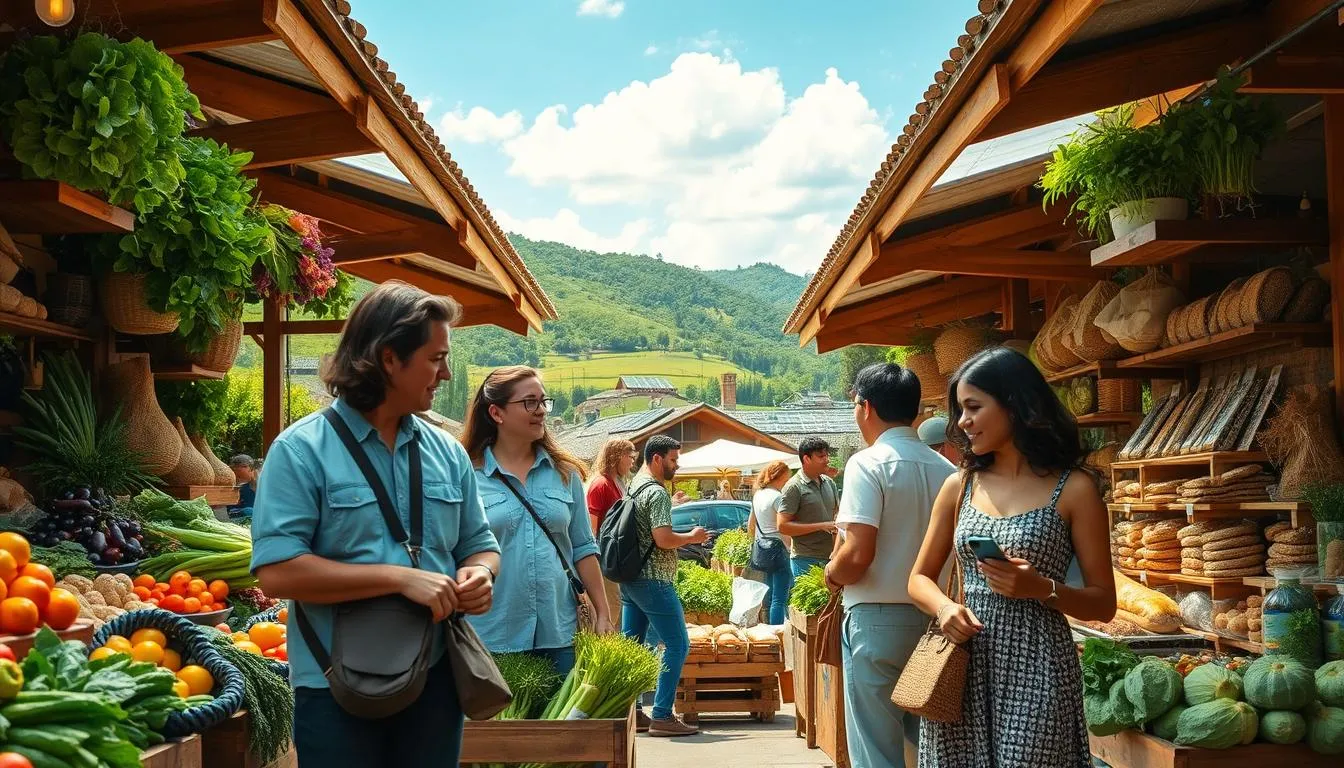
Understanding Food Miles and Their Impact
Food miles refer to the distance food travels from production to consumption. Choosing local food reduces these miles, thereby decreasing carbon emissions associated with transportation. The table below illustrates the impact of food miles on carbon emissions.
| Food Item | Locally Sourced | Imported |
|---|---|---|
| --- | --- | --- |
| Apples | 100 miles, 0.1 kg CO2 | 5000 miles, 2.5 kg CO2 |
| Tomatoes | 50 miles, 0.05 kg CO2 | 2000 miles, 1.0 kg CO2 |
Reducing food waste is another critical aspect of sustainable travel. Here are some practical tips:
- Order only what you can finish.
- Choose restaurants that source ingredients locally.
- Use reusable containers or bags for takeaway.
By embracing local cuisine, understanding food miles, and reducing food waste, travelers can make a positive impact on the destinations they visit. These simple yet effective strategies contribute to a more sustainable and responsible travel guide for eco-conscious explorers.
Eco-Friendly Activities and Authentic Experiences
Sustainable travel isn’t just about where you go, but what you do when you get there. Engaging in eco-friendly activities and seeking authentic experiences not only enriches your journey but also contributes to the preservation of the destination.
Sustainable Alternatives to Environmentally Harmful Tourist Activities
Many traditional tourist activities can have detrimental effects on the environment. However, there are often sustainable alternatives that can provide a similar experience with less impact. For example, instead of renting jet skis, consider a guided kayak tour or a leisurely boat ride that supports local operators.
Voluntourism: How to Help Without Hurting
Voluntourism can be a powerful way to contribute to local communities, but it requires careful consideration. Research organizations thoroughly to ensure they are transparent, accountable, and genuinely beneficial to the local population. Learn more about sustainable vacation planning.
Applying Leave No Trace Principles in Various Settings
The Leave No Trace principles are a set of guidelines that help minimize human impact on the environment. These principles can be applied in various settings, from wilderness areas to urban environments. They include planning ahead, staying on designated trails, and disposing of waste properly.
| Leave No Trace Principle | Application in Travel |
|---|---|
| Plan Ahead and Prepare | Research destinations, pack appropriately, and check weather forecasts. |
| Travel and Camp on Durable Surfaces | Stay on marked trails and avoid sensitive habitats. |
| Dispose of Waste Properly | Pack out all trash and use recycling facilities when available. |
Digital Sustainability: The Overlooked Aspect of Green Travel
While eco-friendly accommodations and transportation are well-discussed, the digital sustainability of travel remains a largely uncharted territory. As we navigate the world, our digital footprint can have a significant impact on the environment.
The Environmental Footprint of Constant Connectivity
The constant need to be connected can lead to an increased carbon footprint due to the energy consumption of devices and data centers. “The internet is a massive, complex system that consumes a lot of energy,” notes a study on digital sustainability. For more insights on sustainable travel trends, visit this responsible travel guide.
Benefits of Selective Unplugging While Traveling
Choosing to unplug or limit screen time while traveling not only reduces energy consumption but also enhances the travel experience. It allows for a more immersive connection with the surroundings and local culture. **
Embracing digital detox** can lead to a more fulfilling travel experience.
“The world is a book, and those who do not travel read only one page.” - Saint Augustine
Balancing Documentation and Present-Moment Experience
While documenting travels can be a way to share experiences, it’s essential to strike a balance between capturing moments and being present. **
Mindful travel** involves being aware of one’s surroundings and not letting the need to document overshadow the experience.
By being mindful of our digital habits, we can contribute to more green travel ideas and practices, making our travels more sustainable.
Conclusion: Transforming Travel One Trip at a Time
As we reflect on the best practices for sustainable travel and tourism, it’s clear that every trip presents an opportunity to make a positive impact. By incorporating sustainable travel tips into our journeys, we can significantly reduce our environmental footprint, support local communities, and promote eco-friendly tourism practices.
The journey towards sustainable travel is a collective effort, requiring the participation of travelers, tourism operators, and local governments. By choosing eco-friendly accommodations, transportation, and activities, travelers can drive demand for more sustainable tourism options.
As you plan your next trip, consider the tips and practices outlined in this article. From reducing waste and conserving water to supporting local economies and respecting wildlife, every decision counts. Together, we can transform the way we travel, one trip at a time, fostering a more sustainable and responsible tourism industry.
FAQ
What are some simple ways to make my travels more sustainable?
To make your travels more sustainable, consider practices like reducing single-use plastics, choosing eco-friendly accommodations, and opting for transportation methods with lower carbon emissions, such as trains or buses, when possible. Additionally, respecting local cultures and environments, and supporting local economies by spending money on local goods and services can make a significant difference.
How can I verify if a tour operator is truly sustainable?
To verify if a tour operator is truly sustainable, look for certifications from reputable organizations that specialize in sustainable tourism. Research their policies on environmental protection, community engagement, and waste management. Reading reviews and asking for references can also provide insights into their practices.
Are eco-lodges always a more sustainable option?
While eco-lodges are designed to minimize environmental impact, not all eco-lodges are created equal. It’s essential to research their sustainability practices, such as energy sourcing, waste management, and community involvement, to ensure they align with your values. Some eco-lodges might be more sustainable than traditional hotels, but it’s crucial to verify their claims.
How does carbon offsetting work, and is it effective?
Carbon offsetting involves calculating the amount of carbon dioxide emissions from your travel activities and then investing in projects that reduce greenhouse gas emissions elsewhere. This can include reforestation, renewable energy projects, or energy efficiency improvements. While carbon offsetting can be effective, it’s most impactful when combined with efforts to reduce emissions directly.
Can sustainable travel really make a difference in combating climate change?
Yes, sustainable travel practices can contribute to combating climate change by reducing greenhouse gas emissions, supporting conservation efforts, and promoting the efficient use of resources. While the impact of individual actions may seem small, collective action across the travel industry and among travelers can lead to significant positive change.
What are some sustainable travel tips for reducing waste?
To reduce waste while traveling, pack reusable items like water bottles, shopping bags, and straws. Avoid single-use plastics, choose accommodations and tour operators that minimize waste, and be mindful of your consumption. Properly disposing of waste and recycling when possible also helps minimize your environmental footprint.
How can I support local communities during my travels?
Supporting local communities can be achieved by spending money on local goods and services, staying in locally owned accommodations, and engaging with local cultures respectfully. Participating in community-based tourism initiatives and learning about local customs and traditions can also foster meaningful exchanges.
What role does digital sustainability play in green travel?
Digital sustainability in travel involves being mindful of the environmental impact of digital activities, such as reducing the need for physical documentation by opting for digital tickets and itineraries, and limiting digital connectivity to reduce energy consumption. Being present in the moment and avoiding excessive digital documentation can also enhance your travel experience.