The Role of Environmental Education in Schools Today
As concern for the environment grows, so does the importance of environmental education in American schools. Environmental education is not just about teaching students the facts about the environment; it's about inspiring them to take action to protect it.

15 min read
As we navigate the complexities of the modern world, the importance of eco education has never been more pronounced. Environmental education plays a pivotal role in shaping the minds of future generations, fostering a deeper understanding of the planet and our impact on it.
By integrating environmental education into school curricula, we can empower students with the knowledge and skills necessary to tackle pressing environmental issues. Studies have shown that such programs not only enhance environmental awareness but also improve academic performance across various disciplines, as highlighted in research on the benefits of environmental education for K-12.
Key Takeaways
- Eco education enhances knowledge across multiple disciplines.
- It promotes environmentally friendly behaviors among students.
- Environmental education develops critical 21st-century skills.
- Such programs increase motivation to learn and civic engagement.
- Eco education can be seamlessly integrated into existing curricula.
The Current State of Environmental Education in American Schools
As concern for the environment grows, so does the importance of environmental education in American schools. Environmental education is not just about teaching students the facts about the environment; it’s about inspiring them to take action to protect it.
Historical Development of Eco-Education in the US
The roots of environmental education in the US can be traced back to the early 20th century, with the conservation movement. Over the years, it has evolved to include a broader focus on ecological and environmental issues. Today, environmental education encompasses a wide range of topics, from climate change to biodiversity.
Statistical Overview of Implementation Across States
The implementation of environmental education varies significantly across different states. Some states have made significant strides in integrating environmental education into their curricula, while others lag behind.
| State | Environmental Education Mandate | Integration Level |
|---|---|---|
| --- | --- | --- |
| California | Yes | High |
| Florida | No | Medium |
| New York | Yes | High |
Recent years have seen significant policy developments aimed at promoting environmental education. Guidelines have been developed to help schools integrate environmental education into their curricula effectively. These policies emphasize the importance of hands-on learning experiences and community involvement in environmental education.
Understanding the Environmental Education Impact on Student Development
The impact of environmental education on students is multifaceted, influencing various aspects of their development. By integrating environmental education into school curricula, educators can foster a range of benefits that extend beyond traditional academic achievements.
Cognitive Benefits of Nature-Based Learning
Nature-based learning is a crucial component of environmental education, offering cognitive benefits that enhance students’ academic performance and overall development. By engaging with nature, students can develop a deeper understanding of complex concepts and improve their critical thinking skills.
Enhanced Problem-Solving Skills
Environmental education encourages students to explore and understand the natural world, promoting hands-on learning and problem-solving skills. Through outdoor activities and experiments, students learn to analyze problems, think critically, and develop creative solutions.
Improved Attention and Focus
Nature-based learning has been shown to improve students’ attention and focus. By engaging with the natural environment, students can develop a greater sense of curiosity and motivation, leading to improved academic performance and a more positive learning experience.
Social-Emotional Growth Through Environmental Studies
Environmental education also contributes to students’ social-emotional growth, helping them develop essential life skills such as empathy, cooperation, and self-awareness. Through environmental studies, students can build stronger relationships with their peers and develop a greater appreciation for the world around them.
Building Scientific Literacy and Critical Thinking
Environmental education plays a critical role in building scientific literacy and critical thinking skills. By exploring environmental issues and concepts, students can develop a deeper understanding of scientific principles and learn to evaluate information, analyze data, and make informed decisions.
By incorporating environmental education into school curricula, educators can have a positive impact on students’ overall development, fostering a range of cognitive, social, and emotional benefits that can last a lifetime.
The Importance of Eco-Education in Building Sustainable Citizens
As the world grapples with environmental challenges, eco-education emerges as a crucial tool in building sustainable communities. The role of eco-education in schools is multifaceted, contributing significantly to the development of students into environmentally aware and responsible citizens.
Fostering Environmental Values and Ethics
Environmental education instills a sense of responsibility and stewardship for the planet in students. By learning about the interconnectedness of human and natural systems, students develop a moral framework that guides their actions and decisions regarding the environment. This foundation is critical in fostering a generation that values environmental conservation.
Developing Lifelong Conservation Habits
Through hands-on experiences and practical applications, eco-education encourages the development of habits that contribute to environmental conservation. Students learn about sustainable practices and are motivated to adopt them in their daily lives, leading to a lifelong commitment to protecting the environment.
Creating Informed Environmental Decision-Makers
Environmental education equips students with the knowledge and critical thinking skills necessary to make informed decisions about environmental issues. By analyzing data and evaluating the impact of human activities on the environment, students become adept at navigating complex environmental challenges and developing effective solutions.
| Benefits of Eco-Education | Description | Impact |
|---|---|---|
| --- | --- | --- |
| Fostering Environmental Values | Instills a sense of responsibility for the planet | Leads to a generation that values conservation |
| Developing Conservation Habits | Encourages sustainable practices through hands-on experiences | Results in lifelong commitment to environmental protection |
| Creating Informed Decision-Makers | Equips students with knowledge and critical thinking skills | Enables effective solutions to environmental challenges |
The effectiveness of environmental education programs hinges on the core components of their curricula, which should include hands-on learning experiences and systems thinking. “Environmental education is not just about teaching facts, it’s about fostering a deep connection with nature and understanding our impact on it,” says a leading environmental educator.
Experiential and Hands-On Learning Approaches
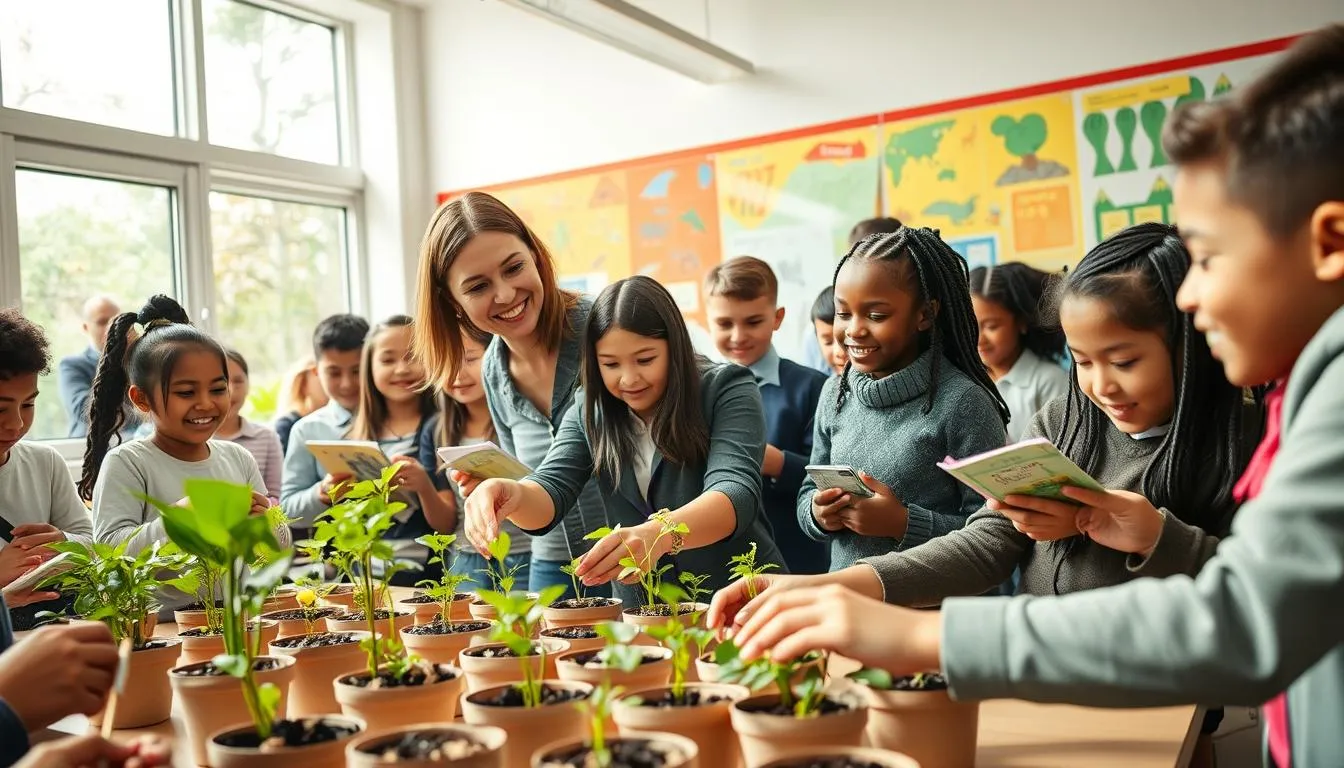
Experiential learning is a crucial element of effective environmental curricula. By engaging in hands-on activities such as field trips, experiments, and projects, students develop a deeper understanding of environmental concepts. This approach not only enhances knowledge retention but also encourages students to apply what they’ve learned in real-world contexts.
Systems Thinking and Interconnectedness
Systems thinking is another vital component, as it helps students understand the complex interconnections within ecosystems and between human and natural systems. By analyzing the relationships between different components of environmental systems, students can better grasp the consequences of their actions and make more informed decisions.
Local to Global Environmental Perspectives
Incorporating both local and global environmental perspectives into the curriculum provides students with a comprehensive understanding of environmental issues. This approach allows students to appreciate the relevance of local environmental challenges while also understanding their connection to global phenomena.
By integrating these core components, environmental curricula can effectively promote teaching environmental awareness and enhance the environmental education impact. As a result, students are better equipped to address the complex environmental challenges of the 21st century.
Integrating Environmental Education Across Subject Areas
Environmental education is not limited to science classes; it can be seamlessly integrated across multiple subject areas to provide a holistic learning experience. This approach not only enhances students’ understanding of environmental issues but also fosters critical thinking and problem-solving skills.
By incorporating environmental themes into various subjects, educators can create a cohesive and comprehensive curriculum that promotes environmental literacy among students.
Environmental Themes in Science and STEM
In science and STEM subjects, environmental themes can be integrated through topics such as climate change, conservation biology, and sustainable practices. For instance, students can analyze data on carbon emissions and explore ways to reduce their school’s carbon footprint. According to a study on environmental education, “students who participate in hands-on environmental learning projects show a significant increase in their understanding of scientific concepts” ERIC_ED367129.
Eco-Literacy in Language Arts and Social Studies
In language arts, eco-literacy can be promoted through literature that focuses on environmental themes, such as nature writing or environmental poetry. In social studies, discussions on environmental policies and their impact on different communities can enhance students’ understanding of the social dimensions of environmental issues.
Environmental Art and Creative Expression
Environmental art projects encourage students to express their understanding of environmental issues creatively. This can include creating sculptures from recycled materials, painting murals that depict local ecosystems, or composing music inspired by nature.
Mathematics Through Ecological Data Analysis
Mathematics can be integrated with environmental education through the analysis of ecological data. Students can collect data on local wildlife populations, analyze water quality, or model population growth using mathematical techniques.
| Subject Area | Environmental Education Integration Ideas |
|---|---|
| Science and STEM | Climate change projects, conservation biology, sustainable practices |
| Language Arts | Nature writing, environmental literature, eco-poetry |
| Social Studies | Environmental policy discussions, community impact studies |
| Art | Recycled material sculptures, nature-inspired murals, eco-music |
| Mathematics | Ecological data analysis, wildlife population studies, water quality monitoring |
Schools and Sustainability: Creating Living Laboratories
Creating a sustainable future begins in our schools, where the next generation learns through hands-on experiences. By transforming schools into living laboratories, we can provide students with the knowledge, skills, and inspiration to become environmental stewards.
Designing and Utilizing School Gardens
School gardens are a powerful tool for environmental education, offering a unique blend of hands-on learning and connection with nature. These gardens can be used to teach a variety of subjects, from science and mathematics to nutrition and sustainability.
Year-Round Learning Opportunities
**
School gardens provide year-round learning opportunities**, allowing students to observe and participate in the growth cycle of plants, understand seasonal changes, and learn about the importance of biodiversity.
Connecting Food Systems to Curriculum
By integrating school gardens into the curriculum, educators can teach students about food systems, nutrition, and the environmental impact of food choices, promoting healthier eating habits and sustainability practices.
Campus Greening and Sustainable Operations
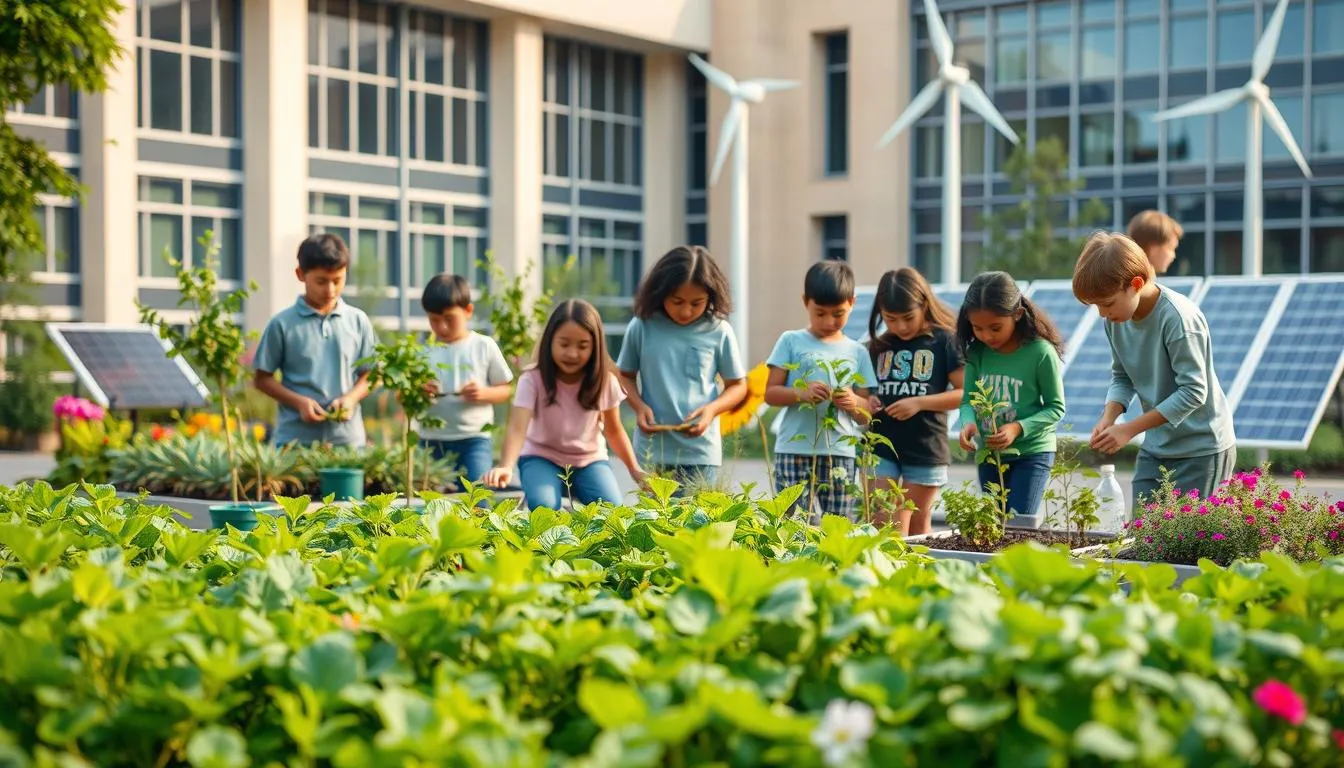
Campus greening initiatives, such as planting trees and creating green spaces, not only beautify the school environment but also provide opportunities for environmental education and community engagement. Implementing sustainable operations, such as energy-efficient lighting and waste reduction programs, demonstrates a school’s commitment to sustainability and serves as a model for students.
Community Partnerships for Environmental Projects
Community partnerships are essential for successful environmental education projects. By collaborating with local organizations, businesses, and government agencies, schools can access resources, expertise, and funding to support their sustainability initiatives. These partnerships also help to foster a sense of community and promote environmental stewardship beyond the school walls.
Teaching Environmental Awareness: Strategies That Work
**
Teaching environmental awareness** in schools is a multifaceted approach that requires engaging and age-appropriate strategies. Effective environmental education can inspire students to become active participants in protecting the environment.
Age-Appropriate Environmental Education Methods
Different age groups require tailored approaches to environmental education. For younger students, hands-on activities such as nature walks and simple recycling projects can spark curiosity. Older students can engage in more complex projects, such as studying local ecosystems or analyzing environmental data.
**
Project-based learning** is particularly effective as it allows students to explore real-world environmental issues in depth. This approach not only educates students about environmental challenges but also empowers them to develop solutions.
Project-Based Learning for Real-World Impact
Project-based learning enables students to tackle real-world environmental problems, fostering a deeper understanding of ecological concepts. By working on projects such as creating school gardens or reducing waste, students learn about the importance of sustainability and conservation.
This hands-on approach also develops critical thinking and problem-solving skills, as students must analyze issues, brainstorm solutions, and implement their plans.
Digital Tools and Resources for Environmental Learning
Incorporating digital tools into environmental education can enhance student engagement. Online platforms, educational apps, and virtual field trips offer interactive ways to explore environmental topics.
Resources such as NASA’s Climate Kids and the Environmental Protection Agency’s (EPA) environmental education materials provide educators with a wealth of information and activities to support their teaching.
By combining traditional teaching methods with modern digital resources, educators can create a comprehensive and engaging environmental education program.
Success Stories: Environmental Education Champions
The power of environmental education lies in its ability to inspire and empower students to become active stewards of the planet. By integrating environmental studies into their curricula, schools are not only enhancing academic learning but also fostering a sense of community and environmental responsibility.
Innovative School Programs Making a Difference
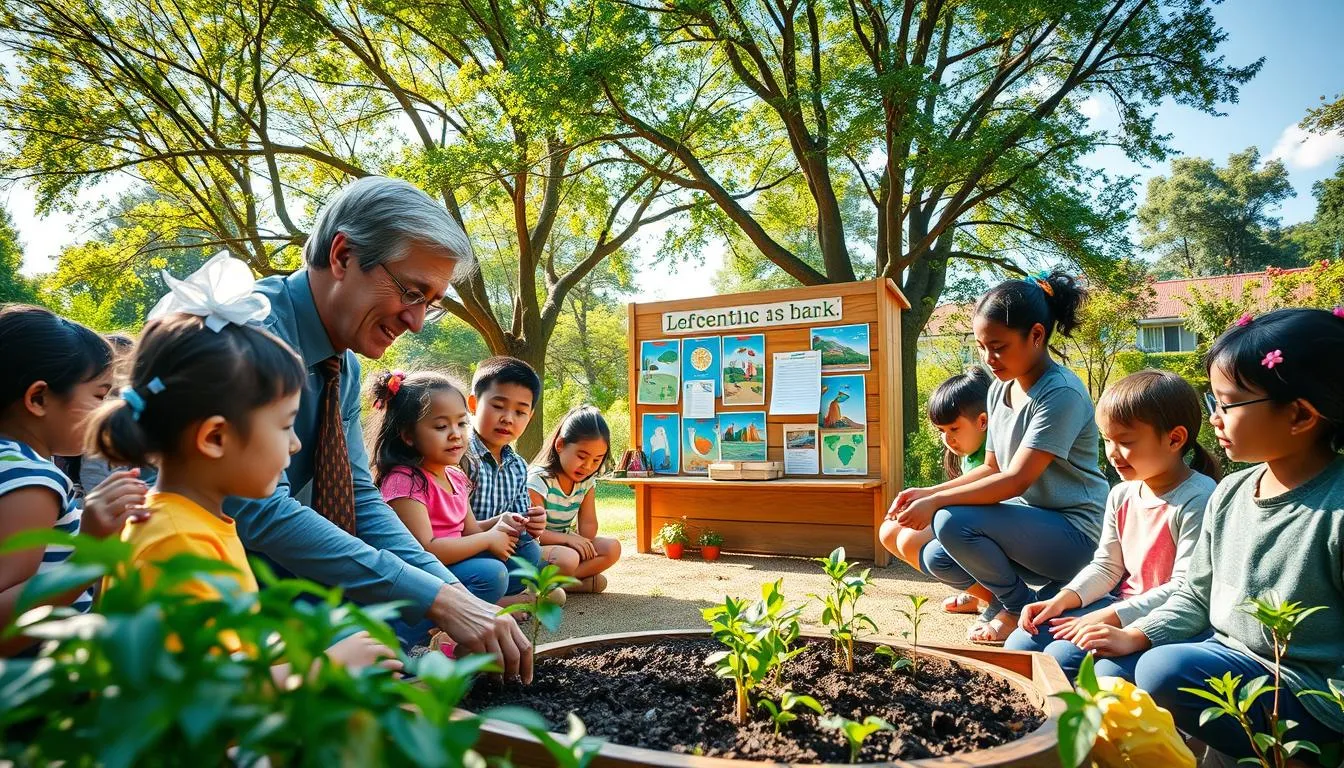
Schools across the nation are developing innovative programs that bring environmental education to life. For instance, some schools have established school gardens where students can learn about ecology, biology, and the importance of sustainable practices. These programs not only teach academic concepts but also promote hands-on learning and community engagement.
Student-Led Environmental Initiatives
Students are taking the lead in environmental initiatives, demonstrating their ability to drive change. From organizing recycling drives to launching campaigns to reduce energy consumption, students are making a tangible impact on their schools and communities. These initiatives not only benefit the environment but also help students develop leadership skills and a sense of accomplishment.
Measuring Long-Term Community Impact
The impact of environmental education extends far beyond the classroom. Studies have shown that communities with robust environmental education programs tend to have higher levels of environmental awareness and more sustainable practices. By measuring the long-term effects of these programs, educators and policymakers can better understand their value and identify areas for improvement. For more information on environmental action initiatives, visit Environmental Action.
Overcoming Barriers to Effective Environmental Education
Effective environmental education requires not only a robust curriculum but also the ability to overcome the barriers that stand in its way. Educators often face numerous challenges when trying to integrate eco-education into their teaching practices.
Addressing Time and Resource Constraints
One of the significant barriers to environmental education is the constraint on time and resources. Schools can address this by integrating eco-education across various subjects, rather than treating it as a separate entity. This approach not only saves time but also enriches the learning experience by providing a holistic understanding of environmental issues.
Navigating Political and Community Challenges
Political and community challenges can also hinder the implementation of environmental education. Educators can navigate these challenges by building strong community partnerships and engaging in open dialogue with stakeholders. This helps in creating a consensus on the importance of eco-education.
Ensuring Equitable Access to Nature-Based Learning
Ensuring that all students have equitable access to nature-based learning is crucial. Schools can achieve this by developing school gardens or partnering with local organizations to provide outdoor learning experiences. This not only enhances the learning experience but also promotes inclusivity.
Conclusion: Empowering the Next Generation of Environmental Stewards
Environmental education is crucial in shaping a sustainable future. By integrating environmental education into school curricula, we can foster a deeper understanding of the environmental education impact on students and communities. This, in turn, promotes schools and sustainability, equipping the next generation with the knowledge and skills necessary to address environmental challenges.
Effective environmental education programs encourage students to think critically about the interconnectedness of human and natural systems. By engaging in hands-on learning experiences, students develop a sense of stewardship and responsibility towards the environment. For more information on environmental education and its benefits, visit Earth.org.
As we move forward, it is essential to continue supporting and advocating for environmental education. By doing so, we can empower the next generation to become active stewards of the environment, driving positive change and promoting a more sustainable future.
FAQ
What is the importance of environmental education in schools?
Environmental education is crucial in schools as it fosters a deeper understanding of the environment, promotes sustainability, and helps students develop essential skills like critical thinking and problem-solving.
How does environmental education impact student development?
Environmental education has a positive impact on student development, enhancing cognitive skills, promoting social-emotional growth, and building scientific literacy.
What are the core components of effective environmental curricula?
Effective environmental curricula include experiential and hands-on learning approaches, systems thinking, and incorporating local to global environmental perspectives.
How can environmental education be integrated across different subject areas?
Environmental education can be integrated into various subjects, such as science, language arts, social studies, and mathematics, by incorporating environmental themes, eco-literacy, and ecological data analysis.
What are some strategies for teaching environmental awareness?
Strategies for teaching environmental awareness include age-appropriate methods, project-based learning, and utilizing digital tools and resources.
How can schools become living laboratories for sustainability?
Schools can become living laboratories by designing and utilizing school gardens, implementing campus greening and sustainable operations, and fostering community partnerships for environmental projects.
What are some common barriers to effective environmental education, and how can they be overcome?
Common barriers include time and resource constraints, political and community challenges, and ensuring equitable access to nature-based learning. These can be overcome by addressing the specific challenges and finding creative solutions.
How does environmental education contribute to building sustainable citizens?
Environmental education fosters environmental values and ethics, helps develop lifelong conservation habits, and creates informed environmental decision-makers, ultimately contributing to a more sustainable future.