Top 10 Innovative Eco-Friendly Packaging Solutions
By embracing sustainable packaging, businesses can contribute to a more environmentally friendly future while also improving their bottom line and market standing.

19 min read
The world is shifting towards a more sustainable future, and one of the key areas of focus is eco-friendly packaging. As consumers become increasingly environmentally conscious, businesses are looking for innovative packaging solutions that not only reduce waste but also promote a positive brand image.
Companies are now exploring new materials and designs that minimize environmental impact. For instance, innovative sustainable packaging solutions such as biodegradable packaging, mushroom packaging, and algae-based packaging are gaining traction. These solutions offer a more sustainable alternative to traditional packaging methods.
Key Takeaways
- Innovative materials are being used to create eco-friendly packaging.
- Sustainable packaging solutions are becoming increasingly popular.
- Businesses are adopting eco-friendly packaging to enhance their brand image.
- New designs and materials are minimizing environmental impact.
- Eco-friendly packaging is a key aspect of a sustainable future.
The Growing Importance of Sustainable Packaging
The need for sustainable packaging solutions has never been more pressing, driven by growing consumer awareness and environmental concerns. As a result, businesses are increasingly turning to best sustainable packaging options to reduce their environmental footprint.
Environmental Impact of Traditional Packaging
Traditional packaging methods have long been associated with significant environmental impacts, including pollution, waste accumulation, and resource depletion. Studies have shown that traditional packaging contributes to a substantial portion of municipal solid waste, highlighting the need for alternatives that can mitigate these issues.
Consumer Demand for Green Alternatives
Consumers are becoming more environmentally conscious, driving demand for green packaging alternatives. This shift in consumer behavior is pushing companies to adopt sustainable packaging practices, not just to reduce their environmental impact but also to stay competitive in a market that increasingly values eco-friendliness.
Business Benefits of Adopting Sustainable Packaging
Adopting sustainable packaging is not only beneficial for the environment, but it also offers several business advantages. These include cost savings through reduced material usage, enhanced brand reputation due to a commitment to environmental responsibility, and compliance with increasingly stringent environmental regulations aimed at reducing packaging waste.
By embracing sustainable packaging, businesses can contribute to a more environmentally friendly future while also improving their bottom line and market standing.
Exploring Modern Eco-Friendly Packaging Options
In response to increasing environmental concerns, the packaging industry is witnessing a significant shift towards green packaging solutions. This transition is driven by both consumer demand and the need for businesses to reduce their environmental footprint.
What Makes Packaging Truly Sustainable?
Truly sustainable packaging goes beyond being biodegradable or recyclable. It involves a holistic approach, considering the entire lifecycle of the packaging, from sourcing materials to end-of-life disposal or recycling. **
Key characteristics include minimal material usage, renewable resources, and designs that facilitate reuse or recycling**.
Key Factors to Consider When Choosing Green Packaging
When selecting eco-friendly packaging, businesses must consider several factors, including the environmental impact of materials, the packaging’s functionality, and cost-effectiveness. A crucial aspect is ensuring that the packaging meets consumer needs while minimizing waste. Some key considerations include:
- Material sourcing and renewability
- Biodegradability and compostability
- Recyclability and reusability
Balancing Functionality with Environmental Impact
Achieving a balance between packaging functionality and environmental sustainability is crucial. While reducing environmental impact is essential, packaging must also protect the product, be convenient for consumers, and comply with regulatory requirements. **
Innovative designs and materials are key to achieving this balance**, enabling businesses to meet both their sustainability goals and consumer expectations.
1. Mushroom Packaging: Nature’s Styrofoam Alternative
Mushroom packaging, made from mycelium and agricultural waste, is emerging as a viable alternative to traditional Styrofoam. This innovative material is not only biodegradable but also offers a sustainable solution to the growing problem of packaging waste.

Production Process
The production of mushroom packaging involves combining mycelium with agricultural waste. The mycelium acts as a natural glue, binding the waste together to form a strong and lightweight material. This process is not only eco-friendly but also requires minimal energy.
Companies Leading the Revolution
Several companies are pioneering the use of mushroom packaging. For instance, learn more about the mycelium packaging used by innovative companies. These companies are at the forefront of reducing packaging waste and promoting sustainable practices.
Applications and Environmental Benefits
Mushroom packaging has a wide range of applications, from protective packaging for electronics to food packaging. Its environmental benefits are significant, including being fully compostable and non-toxic.
| Feature | Traditional Styrofoam | Mushroom Packaging |
|---|---|---|
| --- | --- | --- |
| Material Source | Non-renewable resources | Agricultural waste and mycelium |
| Biodegradability | No | Yes |
| Compostability | No | Yes |
2. Seaweed-Based Packaging Solutions
Algae-derived materials are transforming the packaging industry with their innovative applications. Seaweed-based packaging is not only biodegradable but also offers a sustainable alternative to traditional packaging materials.
The Science Behind Algae Packaging
Seaweed packaging is made from various types of algae, which are cultivated and processed into a material that can be molded into different shapes and forms. This process involves combining algae with other natural ingredients to create a durable yet biodegradable packaging solution. The use of algae in packaging has gained significant attention due to its potential to replace plastic-based packaging.
Edible Seaweed Packaging Applications
One of the most exciting aspects of seaweed packaging is its potential to be edible. Companies are exploring the use of seaweed-based packaging for food products, providing a sustainable and safe alternative to traditional packaging. Edible seaweed packaging can be consumed along with the food, reducing waste and enhancing the overall consumer experience.
Biodegradability and Ocean Safety
Seaweed-based packaging is not only biodegradable but also safe for the ocean. Unlike traditional plastics that contribute to ocean pollution, seaweed packaging decomposes naturally without harming marine life. This makes it an attractive option for companies looking to reduce their environmental footprint. For more information on sustainable packaging initiatives, you can check out this LinkedIn post on sustainable packaging.
| Benefits | Traditional Packaging | Seaweed-Based Packaging |
|---|---|---|
| --- | --- | --- |
| Biodegradability | No | Yes |
| Edibility | No | Yes |
| Ocean Safety | No | Yes |
Compostable mailers and shipping materials are revolutionizing the way businesses approach packaging. As consumers become more environmentally conscious, companies are under pressure to adopt sustainable packaging solutions that minimize waste.
Home Compostable vs. Industrial Compostable Options
Compostable mailers can be categorized into home compostable and industrial compostable options. Home compostable mailers are designed to break down in a home composting environment, typically within a few months. Industrial compostable mailers, on the other hand, require specific conditions found in industrial composting facilities to decompose. For more information on choosing between these options, visit this resource on compostable mailers.
Leading Brands in Compostable Shipping
Several brands are leading the way in compostable shipping materials. These companies are pioneering the use of biodegradable materials that reduce environmental impact without compromising on performance. By adopting compostable mailers, businesses can significantly reduce their carbon footprint.
Performance Compared to Traditional Materials
Compostable mailers offer comparable performance to traditional shipping materials in terms of durability and functionality. They are designed to protect products during shipping while being gentle on the environment. By switching to compostable mailers, companies can contribute to reducing packaging waste and promoting a more circular economy.
4. Plant-Based Plastics and Biopolymers
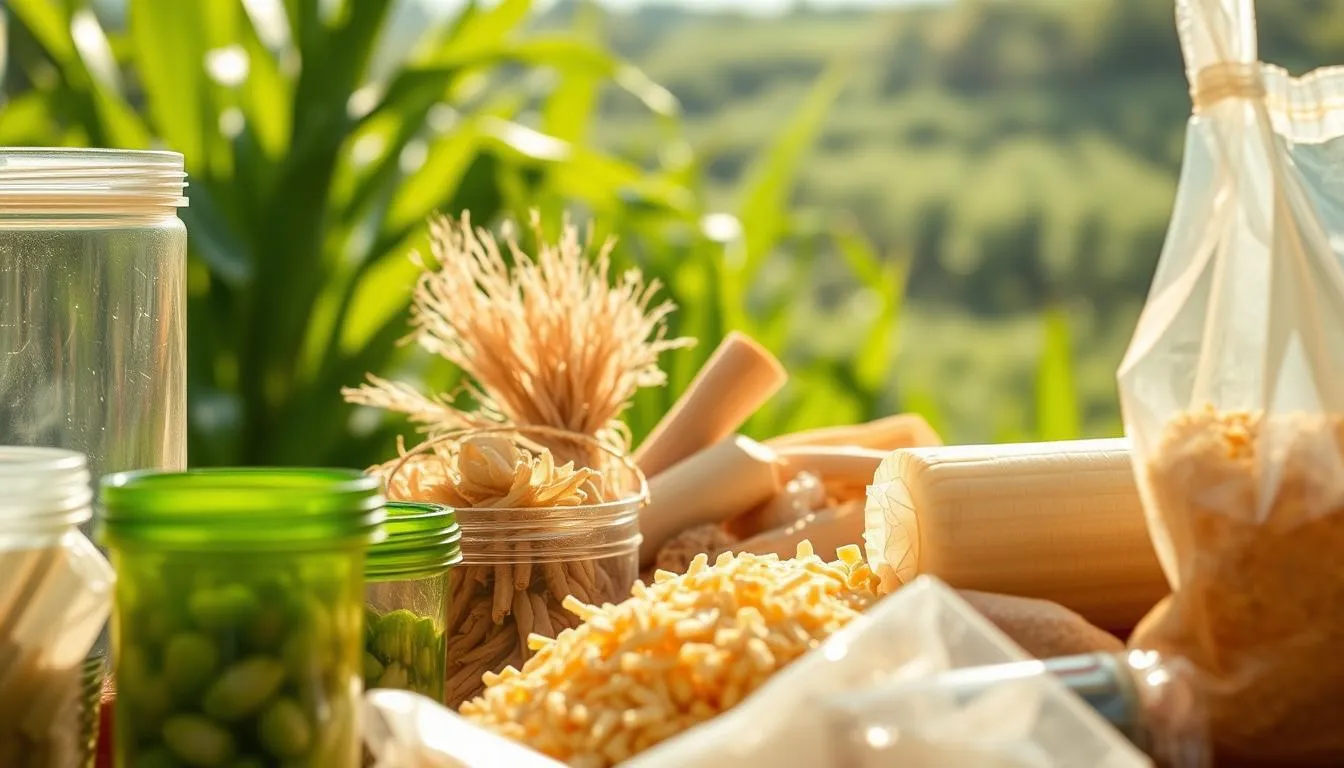
The packaging industry is witnessing a significant shift towards plant-based plastics and biopolymers, offering a more sustainable alternative to traditional plastics. These innovative materials are derived from renewable biomass sources such as corn starch, sugarcane, and potato starch, reducing dependence on fossil fuels and lowering carbon emissions.
PLA (Polylactic Acid) Packaging
PLA packaging is one of the most common applications of plant-based plastics. PLA is a biodegradable thermoplastic derived from renewable resources like corn starch or sugarcane. It’s used in various packaging formats, including containers, bottles, and films. PLA is known for its clarity, strength, and ease of processing, making it a popular choice for food packaging.
Cornstarch and Bagasse Alternatives
Cornstarch and bagasse are other significant sources of bioplastics. Cornstarch-based packaging is biodegradable and compostable, offering a sustainable alternative to traditional plastic packaging. Bagasse, a by-product of sugarcane processing, is used to create molded pulp packaging products like plates, bowls, and containers. These materials are not only eco-friendly but also provide a cost-effective solution for businesses.
Limitations and Future Developments
While plant-based plastics and biopolymers offer numerous benefits, they also have limitations. For instance, PLA has a relatively low thermal stability and can be prone to degradation under certain conditions. However, ongoing research and development are addressing these challenges, improving the performance and scalability of bioplastics. As technology advances, we can expect to see more innovative packaging solutions that are both sustainable and functional.
The future of packaging lies in eco-friendly packaging options that not only reduce environmental impact but also meet consumer demands for sustainable products. By adopting plant-based plastics and biopolymers, businesses can contribute to a more circular economy and enhance their brand reputation.
5. Edible and Dissolvable Packaging
Edible and dissolvable packaging is revolutionizing the way we think about waste in the packaging industry. This innovative approach not only reduces packaging waste but also provides a unique solution to the environmental challenges posed by traditional packaging materials.
Water-Soluble Packaging Technologies
Water-soluble packaging technologies have made significant advancements in recent years. These packaging solutions are designed to dissolve in water, eliminating the need for traditional packaging waste disposal methods. Companies like **
Monosol** are leading the way in developing water-soluble films made from polyvinyl alcohol (PVA) that can be used for various packaging applications.
Edible Films and Coatings
Edible films and coatings are another exciting development in edible packaging. Made from natural ingredients such as seaweed, corn starch, or potato starch, these films can be used to wrap food products, reducing packaging waste and providing an additional layer of freshness.
Food Industry Applications
In the food industry, edible packaging is being used in various applications, including wrapping snacks and covering fruits and vegetables. For instance, **
WikiPearl** uses edible packaging made from natural ingredients to wrap their yogurt products.
Consumer Product Applications
Beyond the food industry, edible and dissolvable packaging is also being explored for consumer products. For example, **
Ooho!** has developed edible water bottles made from seaweed, providing a sustainable alternative to traditional plastic water bottles.
| Packaging Type | Material | Application |
|---|---|---|
| --- | --- | --- |
| Water-Soluble | PVA Film | Detergent Pods |
| Edible Film | Seaweed | Water Bottles |
| Edible Coating | Corn Starch | Fruit Preservation |
6. Reusable Packaging Systems and Circular Models
The shift towards reusable packaging systems is revolutionizing the way businesses approach sustainability. By adopting circular economy models, companies can significantly reduce waste and promote eco-friendly practices. Reusable packaging systems offer a promising solution to the environmental challenges posed by single-use packaging.
Loop’s Circular Packaging Initiative
Loop, a pioneering platform in circular packaging, has gained significant attention for its innovative approach. By partnering with major brands, Loop offers consumers the opportunity to purchase products in durable, reusable containers. These containers are collected, cleaned, and refilled, reducing the need for single-use packaging. As noted by experts in eco-friendly packaging, such initiatives are crucial in minimizing environmental impact.
“The circular economy is not just about recycling; it’s about rethinking the entire system to eliminate waste.”
Refill Stations and Bulk Shopping Solutions
Refill stations and bulk shopping solutions are gaining popularity as consumers become more environmentally conscious. These models encourage customers to bring their containers for refilling, reducing packaging waste. Businesses are responding by setting up refill stations for products like cleaning supplies, personal care items, and groceries.
Durable Multi-Use Packaging Designs
Durable multi-use packaging designs are being developed to withstand multiple uses, further reducing waste. These designs often incorporate materials that are not only durable but also easy to clean and maintain. The use of such packaging can significantly lower the carbon footprint associated with packaging production and disposal.
| Feature | Single-Use Packaging | Reusable Packaging |
|---|---|---|
| --- | --- | --- |
| Material Usage | High | Low |
| Waste Generation | High | Low |
| Cost Efficiency | Short-term | Long-term |
Reusable packaging systems** represent a significant step forward in the quest for sustainable packaging solutions. By embracing circular models and durable designs, businesses can reduce their environmental footprint while meeting consumer demand for eco-friendly options.
7. Innovative Paper and Molded Pulp Alternatives
Innovative paper and molded pulp alternatives are revolutionizing the packaging industry with their eco-friendly benefits. These sustainable materials are not only reducing packaging waste but also providing effective and innovative solutions for businesses.
Stone Paper Technology
Stone paper technology is an innovative approach that uses calcium carbonate, a by-product of limestone, to create a durable, water-resistant paper. This product is tree-free and requires less energy to produce than traditional paper.
Molded Fiber Packaging
Molded fiber packaging is made from natural fibers, such as bamboo or sugarcane, which are molded into specific shapes to protect products during shipping. This type of packaging is biodegradable and compostable, making it an attractive alternative to plastic packaging.
Corrugated Bubble Wrap Replacements
Corrugated bubble wrap replacements are made from recyclable and biodegradable materials, providing a sustainable solution for protective packaging. These alternatives are not only eco-friendly but also offer similar protection to traditional bubble wrap.
| Innovative Material | Description | Benefits |
|---|---|---|
| --- | --- | --- |
| Stone Paper | Made from calcium carbonate | Tree-free, water-resistant |
| Molded Fiber | Produced from natural fibers | Biodegradable, compostable |
| Corrugated Alternatives | Recyclable and biodegradable | Eco-friendly, protective |
8. Upcycled Ocean Plastic Packaging
As the world grapples with plastic pollution, upcycled ocean plastic packaging emerges as a beacon of hope for a more sustainable future. This innovative approach not only reduces marine waste but also transforms it into valuable packaging materials.
Ocean Waste Collection and Processing
The process begins with the collection of ocean waste, primarily plastic, which is then processed and cleaned for use in packaging. Organizations and companies are working together to develop efficient collection methods and processing technologies.
**
Key Steps in Ocean Waste Processing:
- Collection of plastic waste from oceans and coastlines
- Sorting and cleaning of the collected waste
- Shredding or granulating the plastic for reuse
- Transforming the processed plastic into packaging materials
Brands Pioneering Ocean Plastic Packaging
Several brands are leading the way in incorporating upcycled ocean plastic into their packaging. For instance, some cosmetic companies are using ocean plastic for their product packaging, while fashion brands are incorporating it into their accessory lines.
Consumer Response and Environmental Impact
Consumers are increasingly supporting brands that adopt eco-friendly packaging options, including those made from upcycled ocean plastic. This shift not only reduces the environmental impact of packaging waste but also raises awareness about ocean pollution.
| Environmental Benefits | Consumer Impact |
|---|---|
| Reduction in ocean waste | Increased brand loyalty |
| Lower carbon footprint | Positive brand image |
| Promotion of sustainable practices | Educates consumers on environmental issues |
9. Agricultural Waste Converted to Packaging
One of the most promising developments in eco-friendly packaging is the conversion of agricultural waste into usable materials, which is considered among the best sustainable packaging solutions. This approach not only reduces waste but also provides a sustainable alternative to traditional packaging materials, thereby contributing to reducing packaging waste.
Coffee Husk and Coconut Fiber Packaging
Coffee husk and coconut fiber are being innovatively used to create packaging materials. Companies are turning these agricultural by-products into molded packaging solutions that are both biodegradable and compostable. For instance, coffee husk can be processed into a material that resembles molded pulp, used for packaging electronics or consumer goods.
Wine Industry By-Products as Packaging
The wine industry generates significant waste, which can be repurposed into packaging materials. Grape pomace, for example, can be used to create sustainable packaging solutions. This not only reduces the waste from wineries but also provides a unique, eco-friendly packaging option for various products.
Scalability and Commercial Applications
While the concept of using agricultural waste for packaging is promising, scalability and commercial viability are crucial for its success. Companies are investing in technology to make the production process more efficient and cost-effective. As a result, agricultural waste packaging is becoming a viable option for businesses looking to reduce their environmental footprint while maintaining the quality of their packaging.
10. Smart and Minimalist Packaging Design
The shift towards eco-friendly packaging has led to innovative designs that minimize waste and maximize functionality. This approach not only benefits the environment but also enhances brand image and customer satisfaction.
Packaging-Free Initiatives
One of the most significant trends in smart packaging is the move towards packaging-free products. Stores are now offering bulk shopping options where customers can bring their containers to fill with goods like nuts, grains, and cleaning supplies. This not only reduces packaging waste but also encourages consumers to adopt more sustainable shopping habits.
Concentrated Products Requiring Less Packaging
Another strategy is to develop concentrated products that require less packaging. For instance, concentrated laundry detergents use smaller packaging, reducing material waste and lowering transportation emissions. This approach is both cost-effective and environmentally friendly.
Innovative Designs That Reduce Material Use
Innovative packaging designs are also playing a crucial role in minimizing material use. For example, companies are using minimalist design principles to simplify packaging while maintaining product protection. This includes using fewer materials, optimizing packaging shapes, and eliminating unnecessary components.
By adopting these smart and minimalist packaging designs, businesses can significantly reduce their environmental footprint while also improving their brand reputation among eco-conscious consumers.
Conclusion: The Future of Eco-Friendly Packaging
The packaging industry is on the cusp of a revolution, driven by the need for best sustainable packaging solutions. The top 10 innovative eco-friendly packaging solutions explored in this article offer a glimpse into a future where reducing packaging waste is not just a goal, but a reality.
From mushroom packaging to seaweed-based solutions, and from compostable mailers to upcycled ocean plastic packaging, the options for eco-friendly packaging are expanding rapidly. These innovative packaging solutions not only reduce environmental impact but also offer businesses a chance to rebrand themselves as champions of sustainability.
As consumers increasingly demand green alternatives, companies that adopt eco-friendly packaging options will be better positioned to meet these expectations. The future of packaging lies in embracing innovative packaging solutions that balance functionality with environmental responsibility.
By choosing the best sustainable packaging, businesses can contribute to a significant reduction in packaging waste, paving the way for a more sustainable future. The journey towards eco-friendly packaging is just beginning, and it’s an exciting time for companies and consumers alike to explore the possibilities.
FAQ
What are the best eco-friendly packaging options?
Some of the best eco-friendly packaging options include mushroom packaging, seaweed-based packaging, compostable mailers, plant-based plastics, and reusable packaging systems. These innovative solutions reduce packaging waste and minimize environmental impact.
How can businesses benefit from adopting sustainable packaging practices?
Businesses can benefit from adopting sustainable packaging practices by reducing their environmental footprint, enhancing their brand reputation, and appealing to environmentally conscious consumers. Sustainable packaging can also lead to cost savings and compliance with increasingly stringent environmental regulations.
What makes packaging truly sustainable?
Truly sustainable packaging is made from renewable resources, is biodegradable or compostable, minimizes waste, and is designed for recyclability or reuse. It also considers the entire lifecycle of the packaging, from production to disposal, to minimize environmental impact.
Are compostable packaging materials effective?
Compostable packaging materials can be highly effective in reducing waste sent to landfills and minimizing environmental harm. However, their effectiveness depends on proper composting conditions and infrastructure. Home compostable and industrial compostable options have different requirements and applications.
How can consumers contribute to reducing packaging waste?
Consumers can contribute to reducing packaging waste by choosing products with minimal or biodegradable packaging, buying in bulk, avoiding single-use packaging, and participating in recycling programs. They can also support brands that prioritize sustainable packaging practices.
What is the role of innovative packaging design in sustainability?
Innovative packaging design plays a crucial role in sustainability by minimizing material use, optimizing packaging for recyclability or compostability, and enhancing product protection. Smart and minimalist packaging design can significantly reduce waste and environmental impact.
Can eco-friendly packaging be cost-effective?
Yes, eco-friendly packaging can be cost-effective in the long run. While some sustainable materials may have higher upfront costs, they can lead to savings through reduced material use, lower waste disposal costs, and enhanced brand value. Companies like Loop and others are pioneering cost-effective sustainable packaging solutions.
What are some examples of companies leading in sustainable packaging?
Companies like L’Oral, Unilever, and Procter & Gamble are leading in sustainable packaging through initiatives like refill stations, biodegradable materials, and circular packaging models. Other companies, such as those using mushroom packaging and seaweed-based packaging, are also making significant strides.